Tuesday, May 3, 2016

Museums, Galleries, Exhibits... Oh my!

Exciting Events from Today:
  • Trinity College & the Book of Kells
  • Molly Malone Statue
  • Chester Beatty Library
  • Dublin Castle - State Apartments
  • National Museum of Ireland - Archaeology & Natural History
  • National Gallery of Ireland

Professor Wolfe and her HUM 1915 class began the day with a trip to Trinity College.

The bell tower in the center of Liberty Square
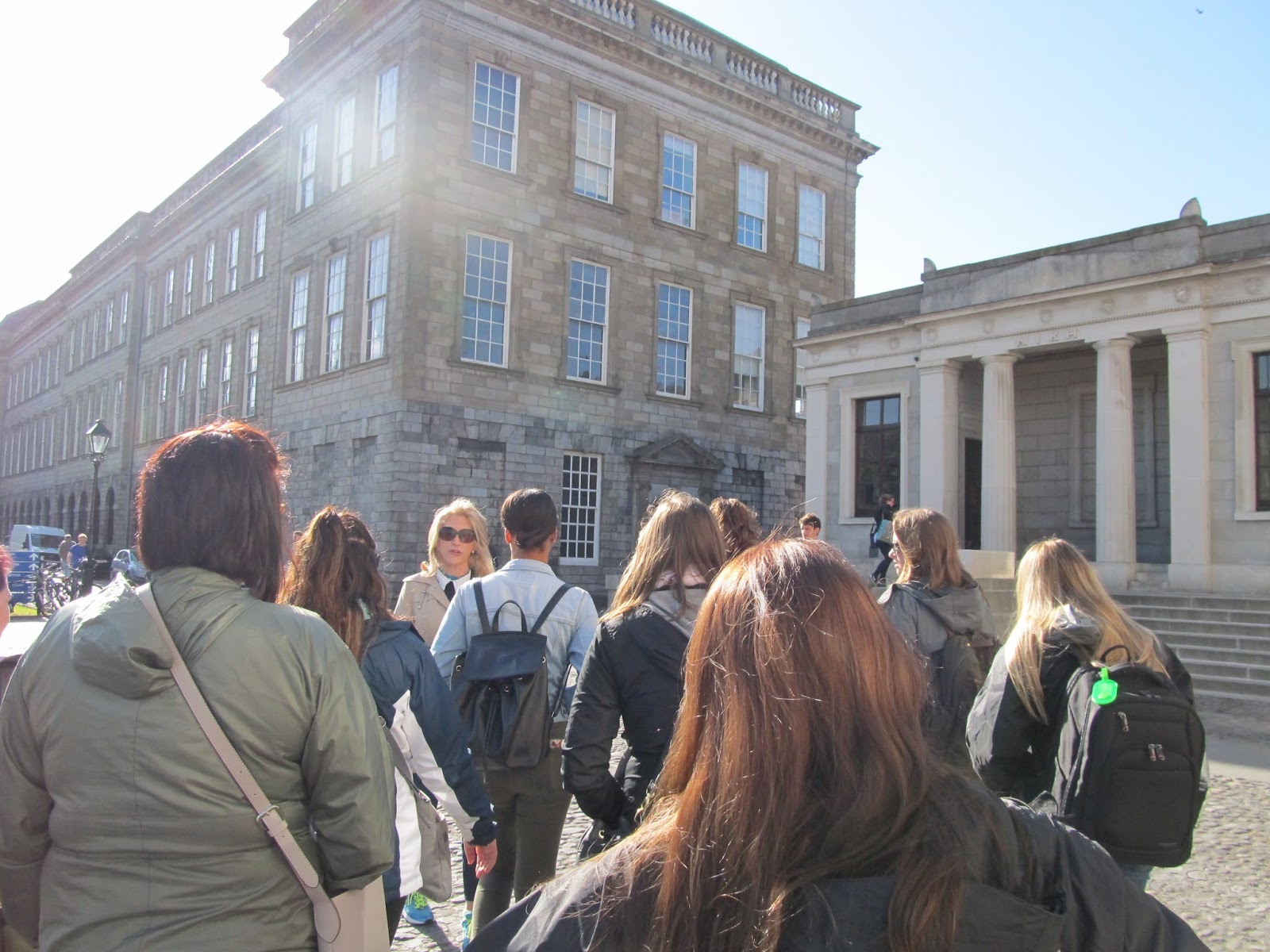
Professor Wolfe tells the class facts about Trinity College.

Here we learned about the Book of Kells. The Book of Kells is an illuminated transcript of the Gospels. The book was written on vellum, paper made of calf skin, inscribed by pens made of swan and goose feathers. The illustrative pigments were blue, yellow, and green. These natural dyes were made from lapis luzili from woad plant, yellow arsenic sulfide, and green copper verdigris. Professor Wolfe and the class then continued to the Long Room in the main chamber of the Old Library at Trinity College where we were surrounded by 65 meters of books very and manuscripts very important to Ireland's history. A significant document held in this area is the Proclamation of 1916. This document is important because in this is where Ireland declares their independence from English rule. It is a very exciting time for our class to be touring Ireland as it is the year of the 100th anniversary of the Irish rebellion.
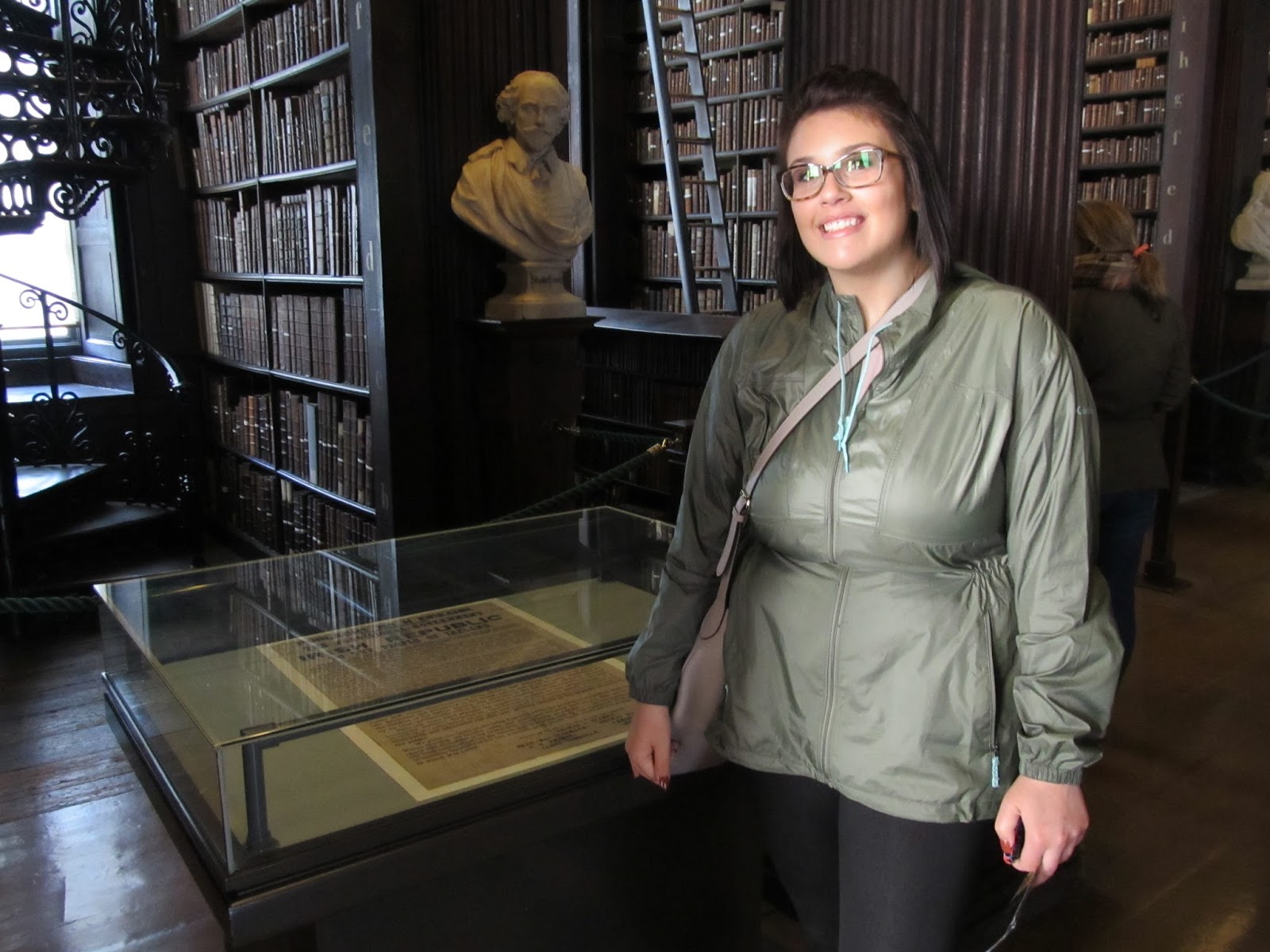
Erika standing by the Proclamation of 1916

Group picture with Professor Wolfe in the Long Room

One our way to the Chester Beatty Library, we made a stop at the statue resurrected to memorialize the folk song about a lady fish monger in Dublin, who was popular with the men. A kind Irishmen serenaded us with the song as Professor Wolfe told us the history. The lyrics include:

"In Dublin's fair city, where the girls are so pretty
I first laid my eyes on sweet Molly Malone
As she wheeled her wheel barrow
Through the streets broad and narrow
Crying cockles and mussels, alive, alive oh"

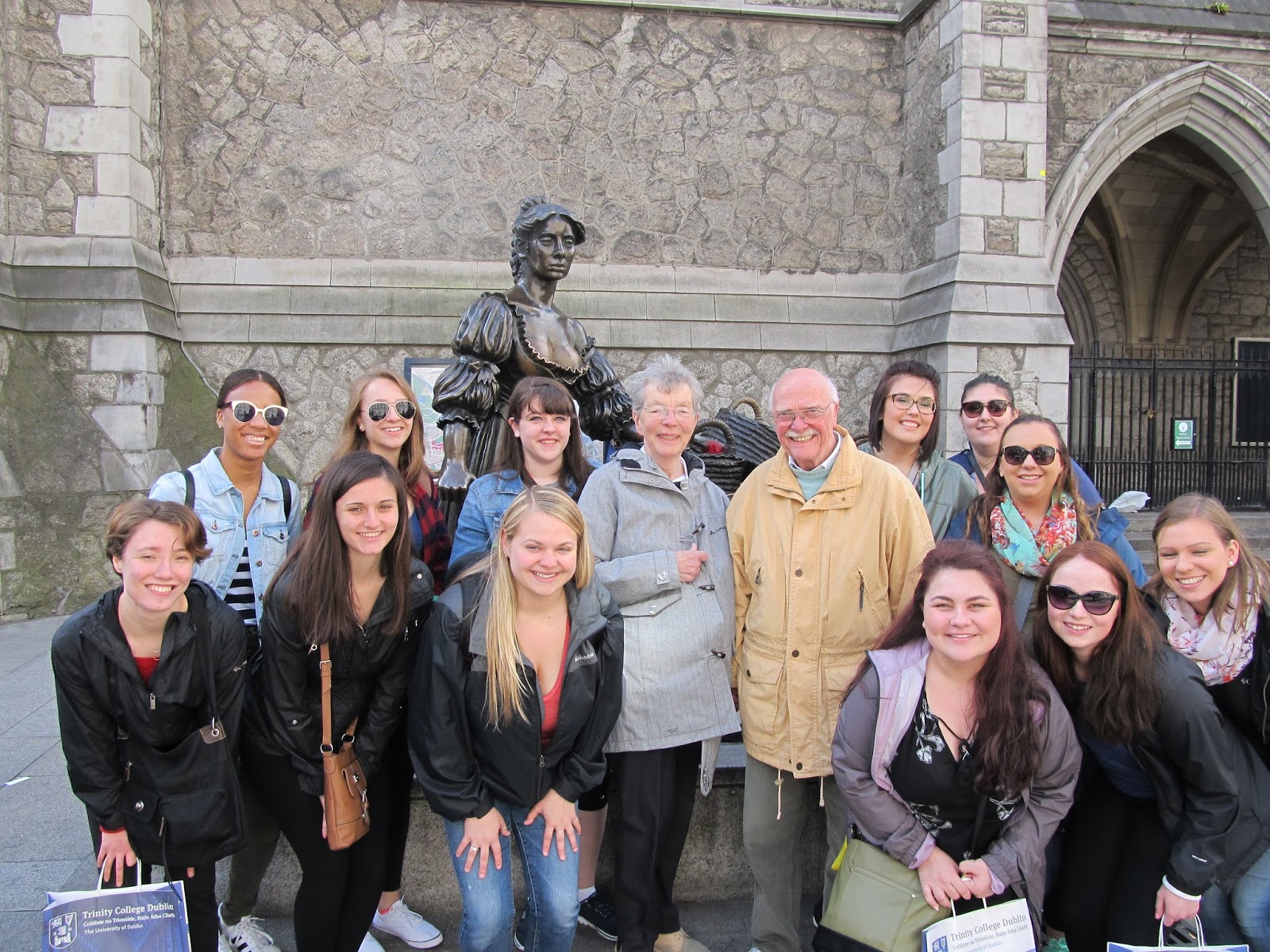
Our visit to Molly Malone and a kind Irish Couple

Next the class embarked on a self guided tour of the Chester Beatty Library. Expanding our view, this library contains a collection of manuscripts, paintings, and artifacts from many different areas of the world and their religions. We examined detailed Buddhist paintings, Chinese Dragon robes, Japanese Woodblock prints, and illuminated manuscripts from Islam, Christianity, Judaism, and many more. We concluded the tour with a delicious lunch based on the culture of the exhibits in the library's Silk Road Cafe with Professor Wolfe.
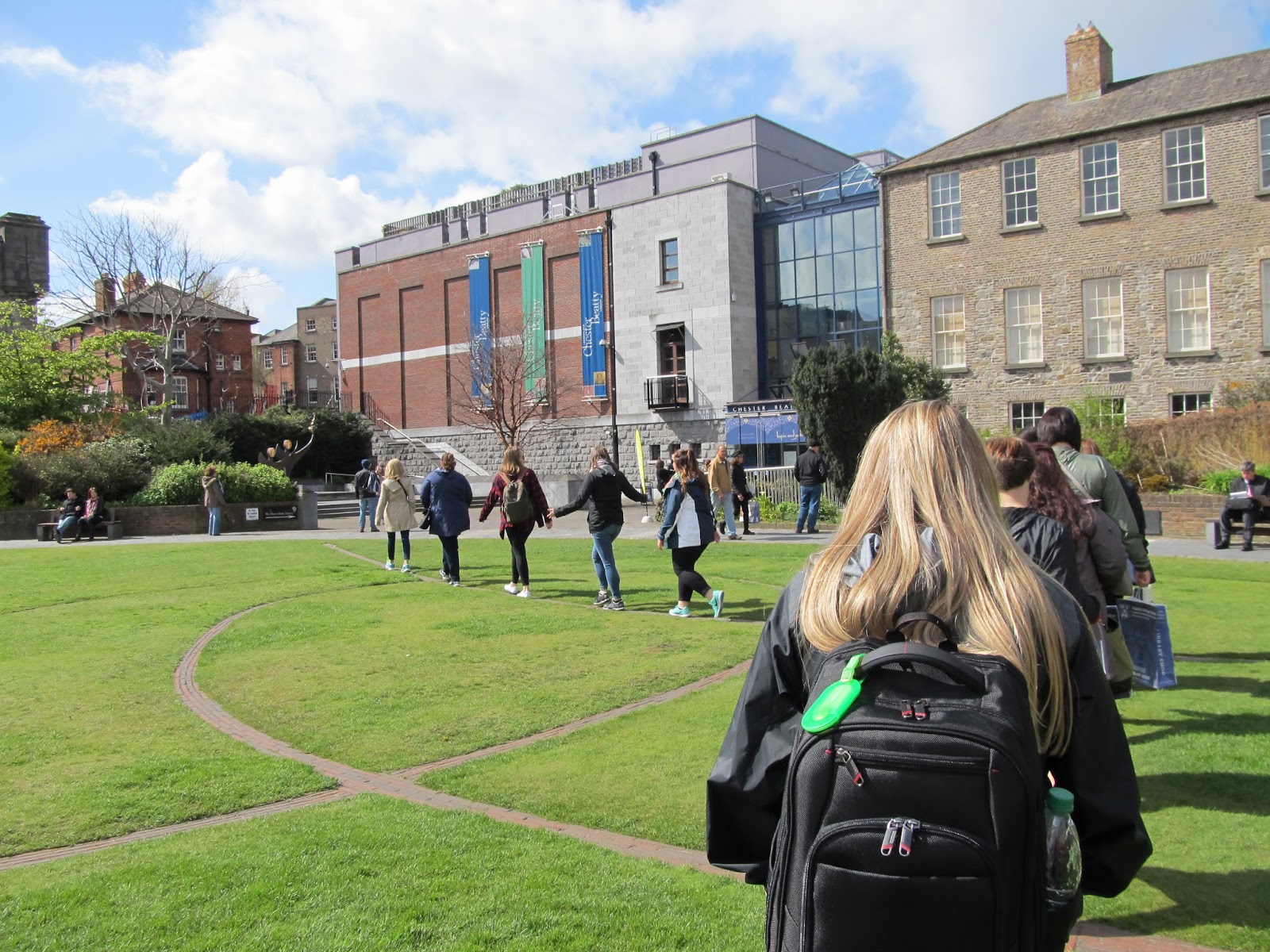
The ducklings follow in single file
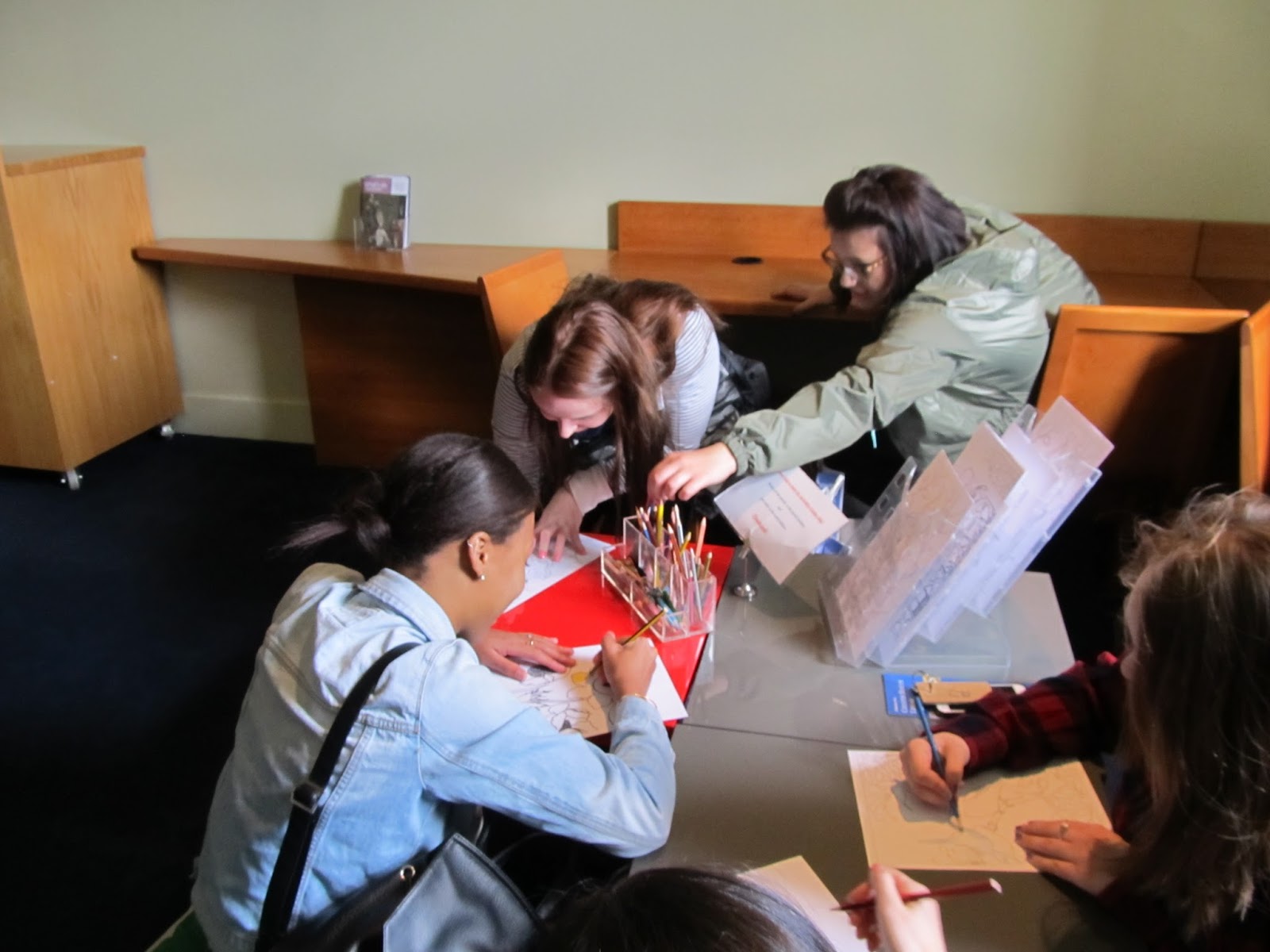
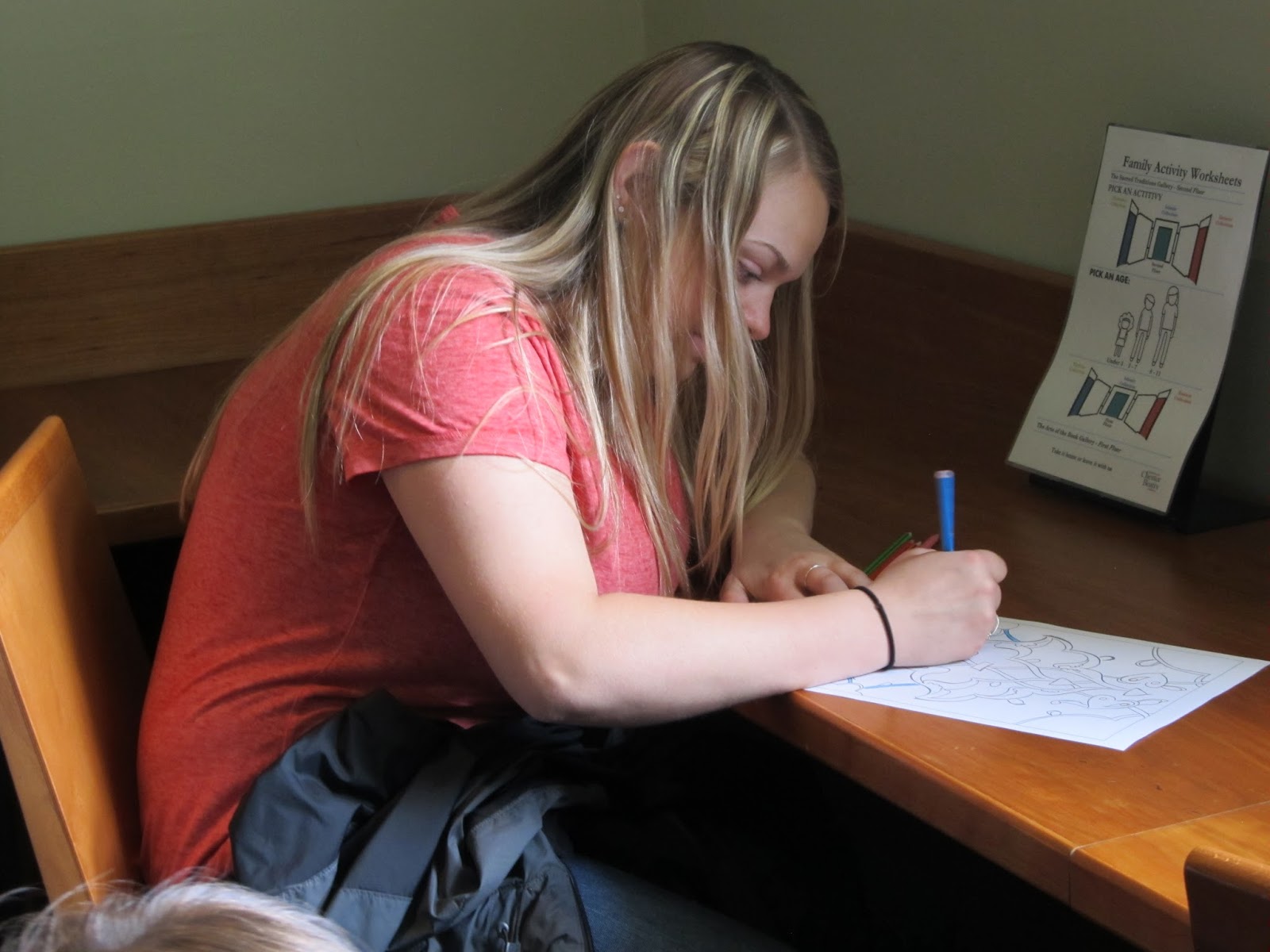
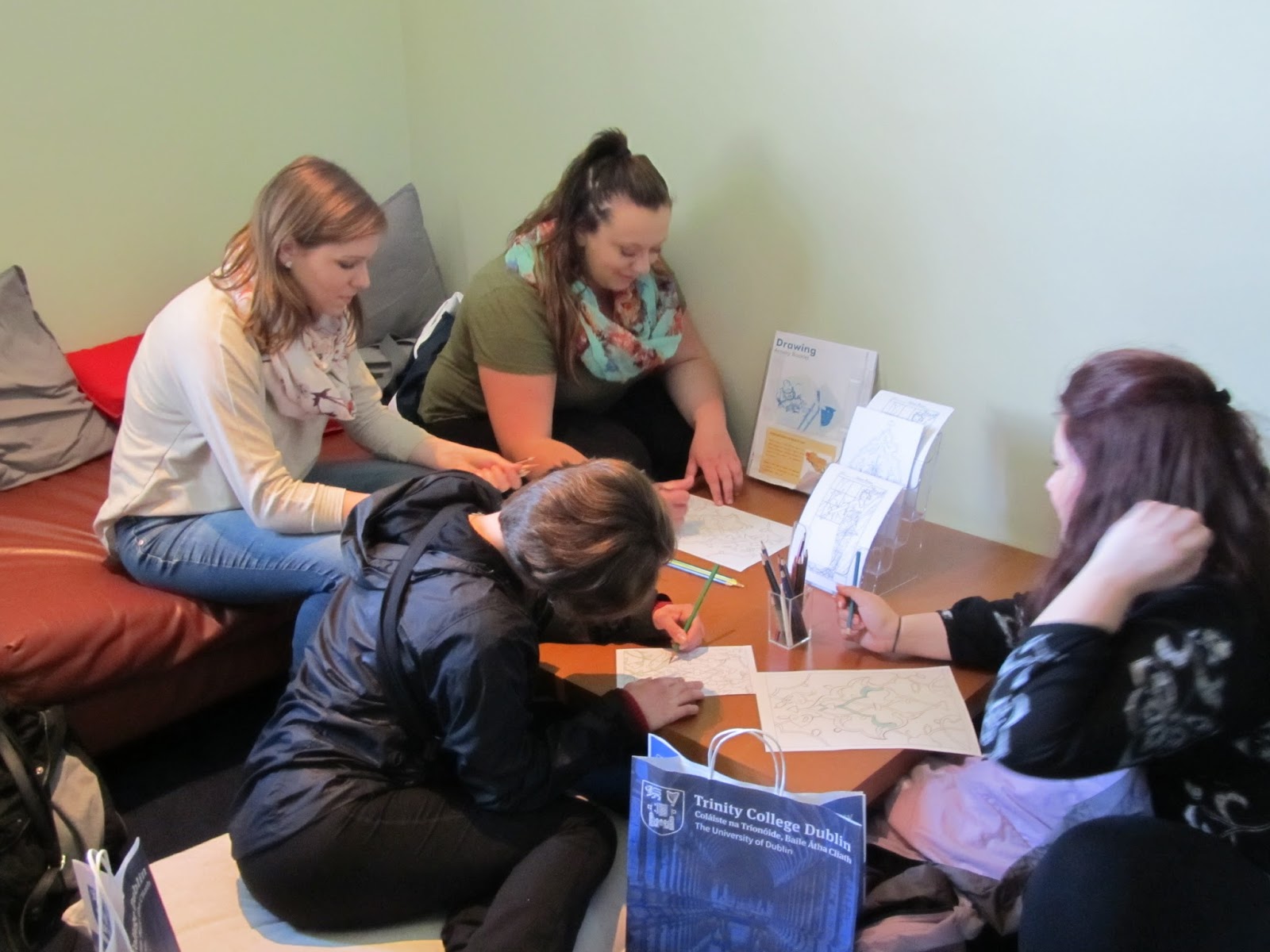
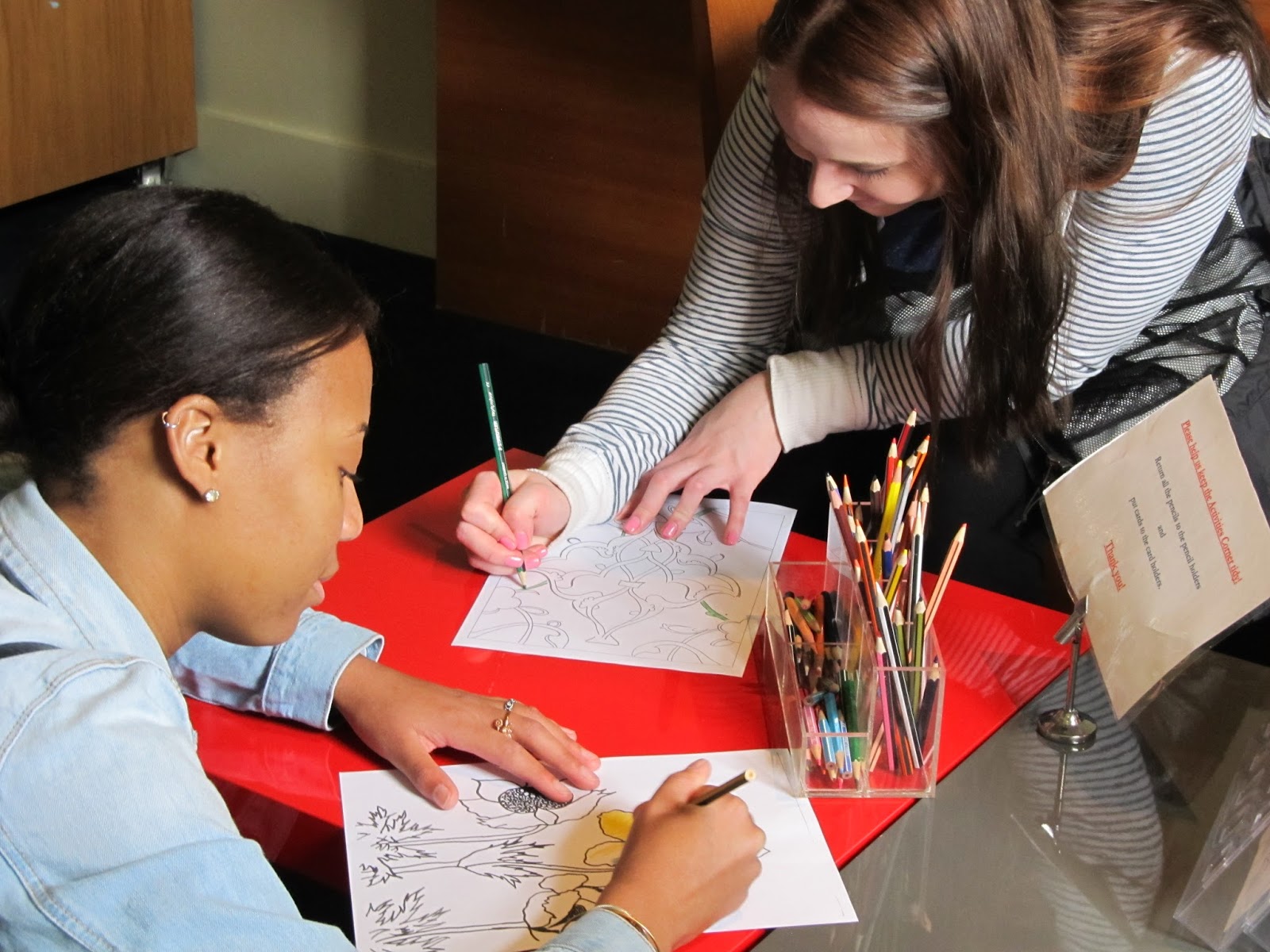
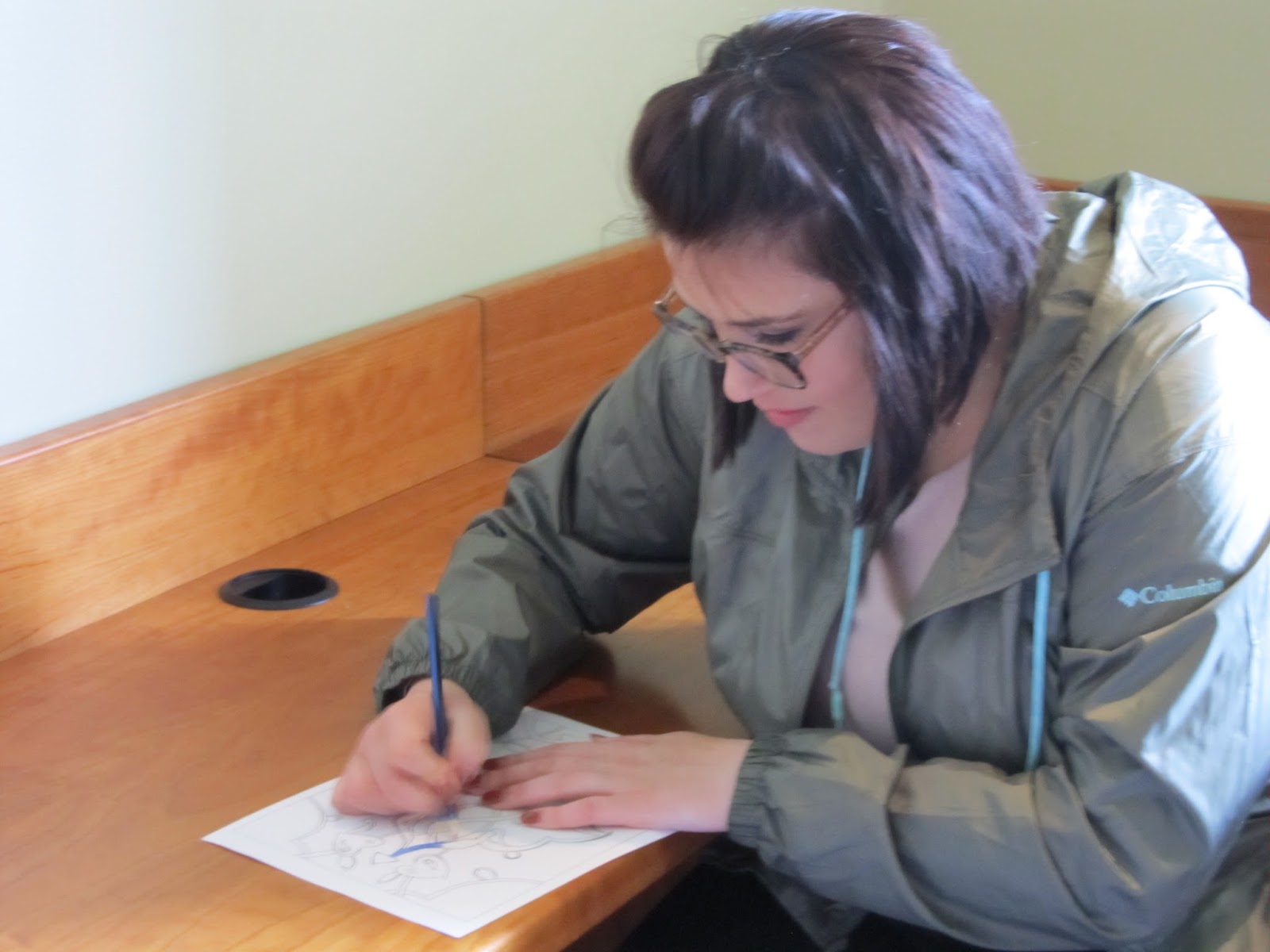
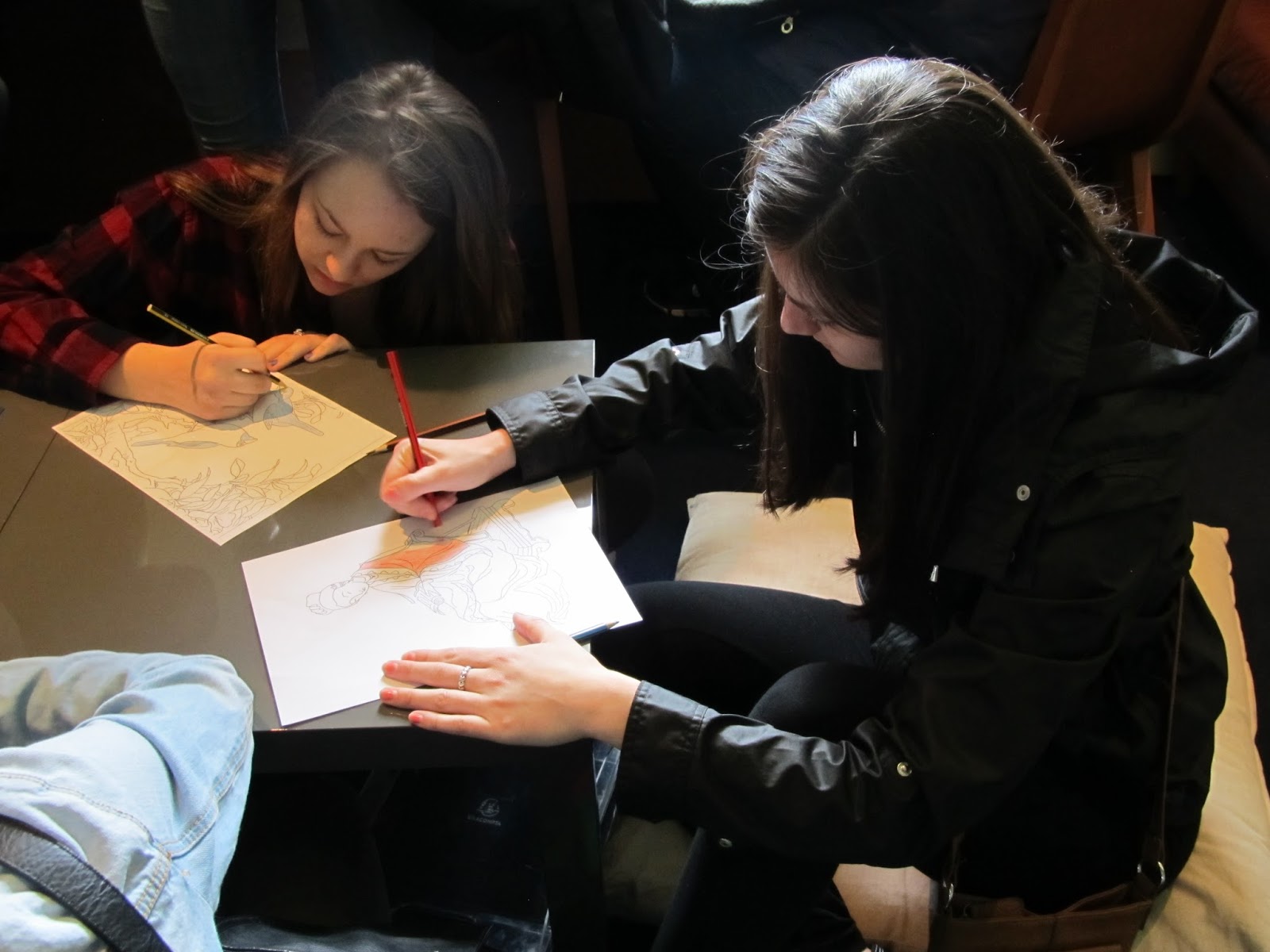
The students take a quick break from looking at the manuscripts to color pages about the religions featured in the exhibits as a way to relax and digest all of the information they just took in.

Our travel class then had a packed afternoon starting at The Dublin Castle. Here the class marveled, at the beauty of St. Patrick's Hall, which is also one of the oldest rooms in the castle's state apartments.
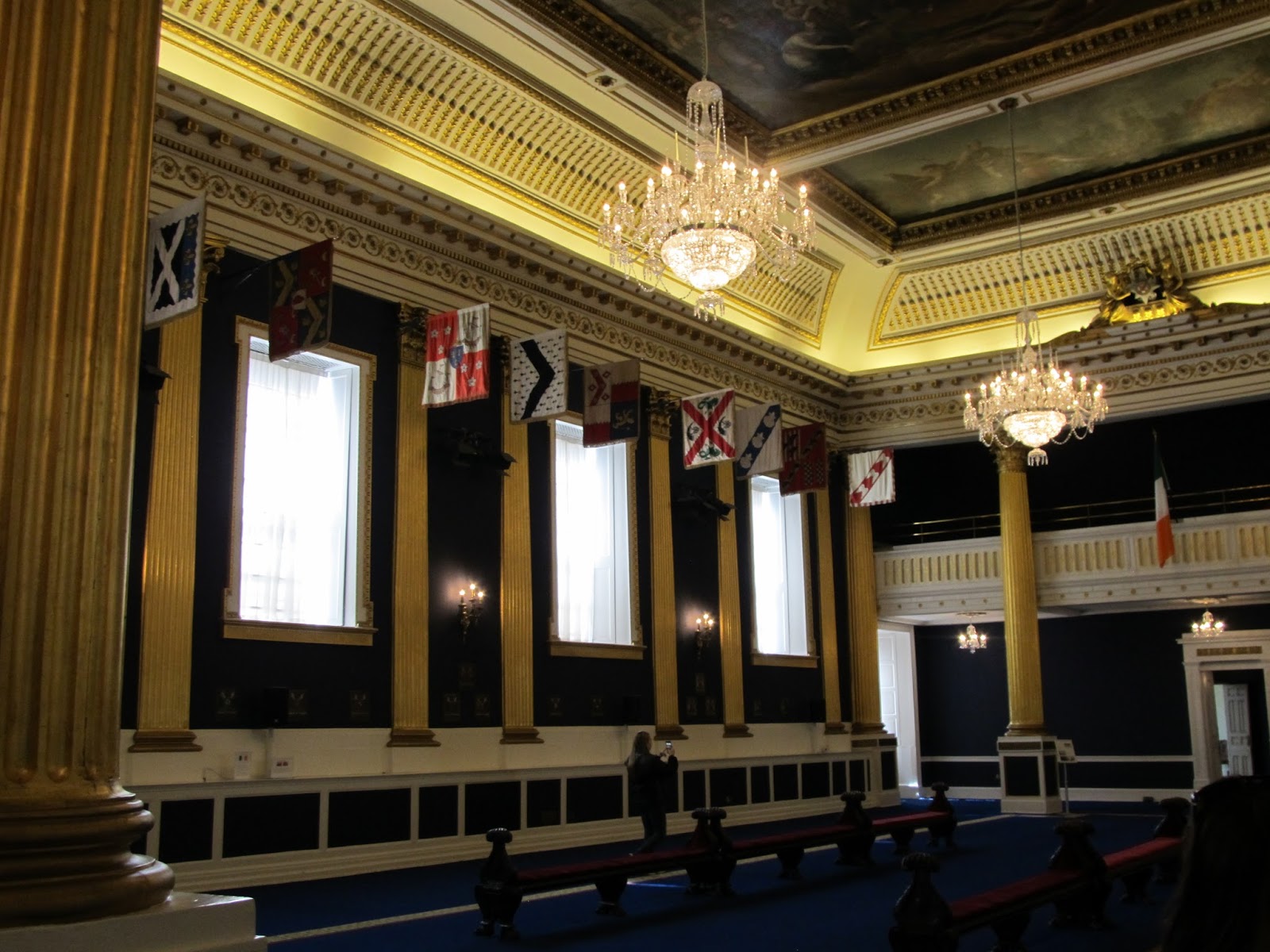


Historically this room was used as a ballroom for the Viceregal Court, today it is used for Ireland's most important state events such as banquets for visiting dignitaries, and every 7 years the Irish president's inauguration takes place here as well. Our class was also impressed by the radiance of the Throne Room.
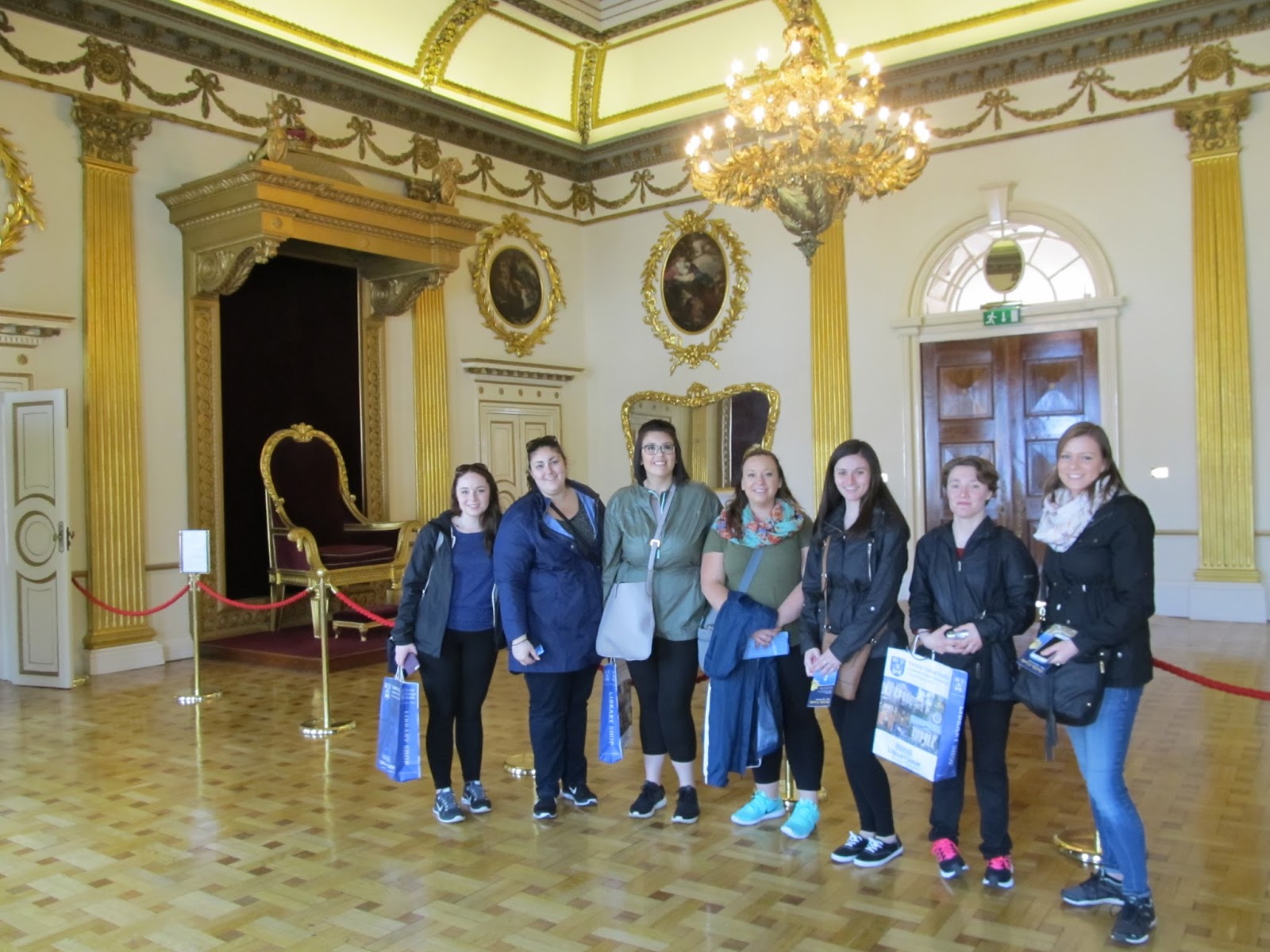


 This room is at the heart of the apartments and was utilized as a welcoming place for visiting monarchs, as well as the presentation of debutantes. The grand throne itself was built for the welcoming of King George IV's visit to Ireland.


Pictured above: Emily O, Hannah, Erika, Sadie, Allie, Brittany, and Kate

The next stop on the class's tour was the National Museum of Ireland's Archaeological division. Here the class observed many artifacts such as, tools, jewelry, and pottery. These discoveries were recovered from the time periods we looked at as a class in our previous class meetings, as well as Dublinia and the Little Museum of Dublin.

A new piece of information that we learned in this museum was that the Celtic tribes used bogs to protect and offer their belongings. Because of the wet nature of the bogs, they knew that the land would consume their precious metal, wooden, and leather goods so that no one else could get to them, so they offered their goods to the land in self defense and for religious beliefs.

Brittany and Allie pose with a portion of a bog that has items from the Stone Age embedded into it.


We then continued our sightseeing for the day with a brief visit to the National Gallery. The exhibit we enjoyed the most was the European exhibit including artists such as Picasso and Monet.
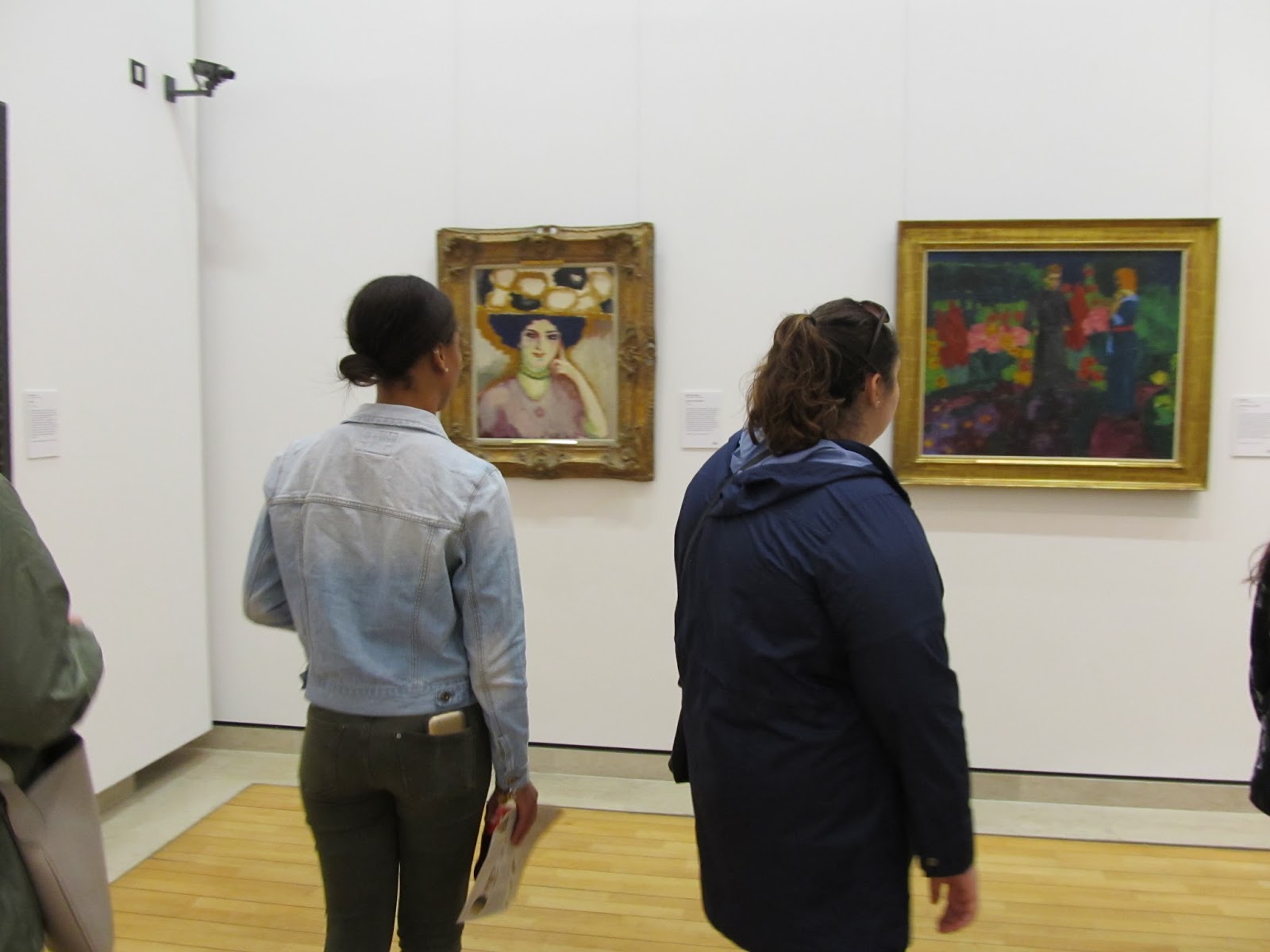
Kaurin and Hannah examine paintings of Picasso and his fellow Hispanic painters.


We concluded our day of sightseeing by visiting the Natural Museum of Ireland: Natural History. At this museum the class saw many different mammals. insects, fish, and birds. It is said that the locals refer to this part of the National Museum as the "Dead Zoo."
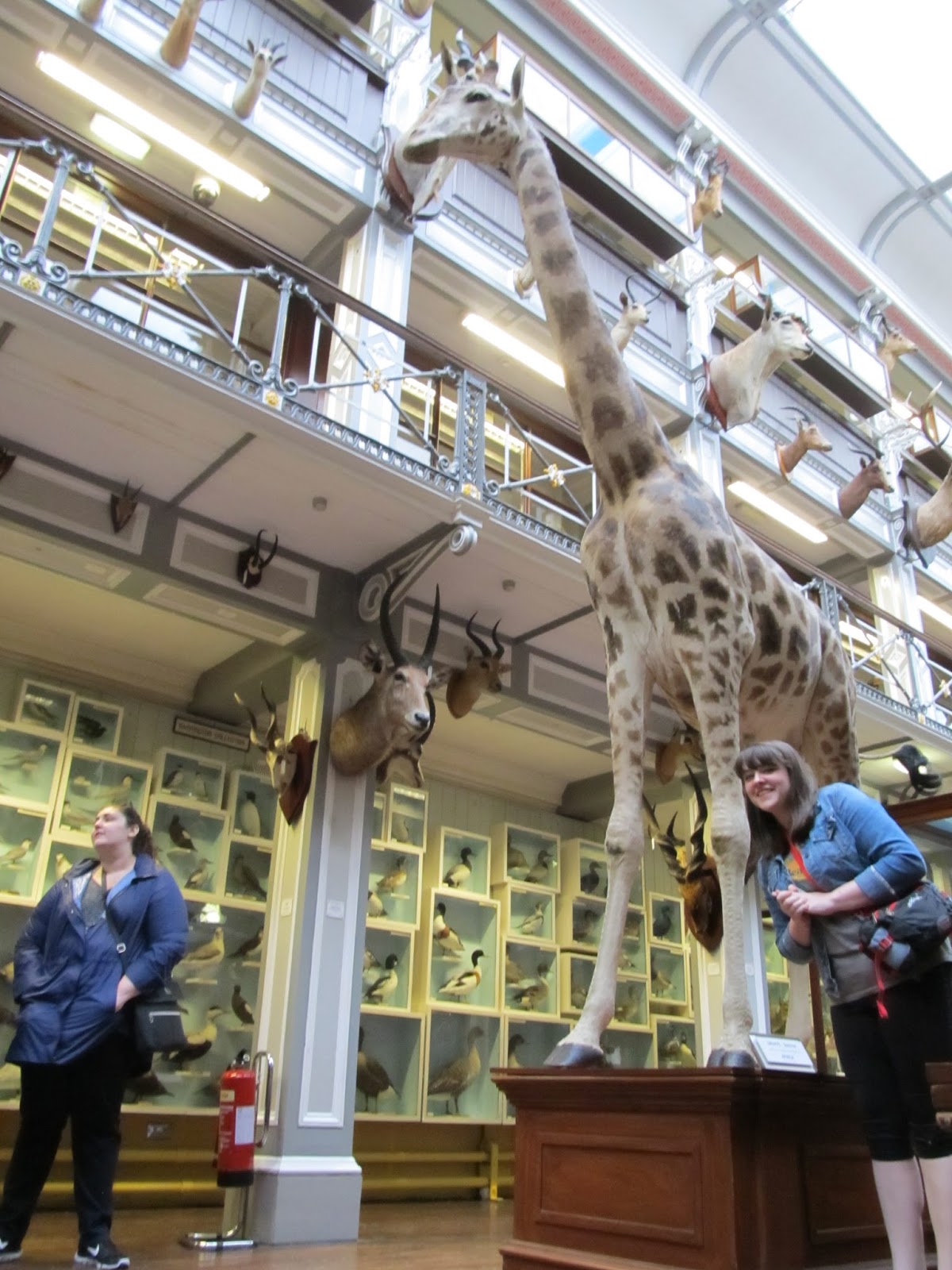
Liz poses with a giraffe

Following our full day of museum viewings and walking, we had another traditional Irish pub dinner at O'Neill's. This common tourist attraction features a buffet of Irish classics and a musical performance every night.

Kaurin and Amelia at dinner in O'Neill's

~~~~~~~~~~~~~~~~~~~~~~~~~~~~~~~~~~~~~~~~~~~~~~~~~~~~~~~


Erika's favorite part of the day was touring Dublin Castle.

We think that this princess deserves one of her own!

Monday, May 2, 2016

Hopping from Medieval to Modern Dublin


Summary of Today's Events:
  • Hop-on Hop-off tours of Dublin
  • Dublinia Museum
  • Christ Church
  • St. Patrick's Cathedral
  • The Guinness Storehouse
  • Walk through Temple Bar

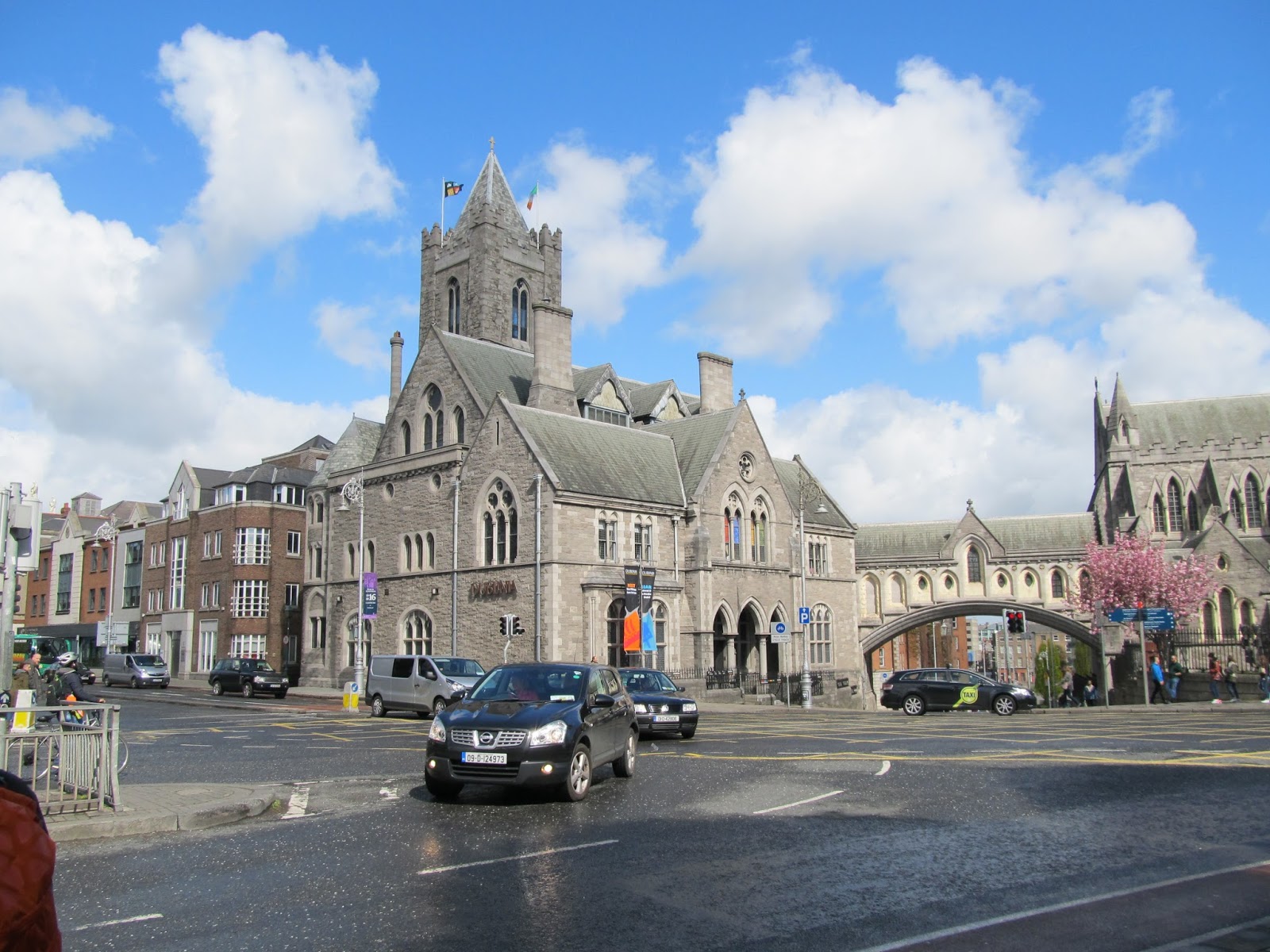
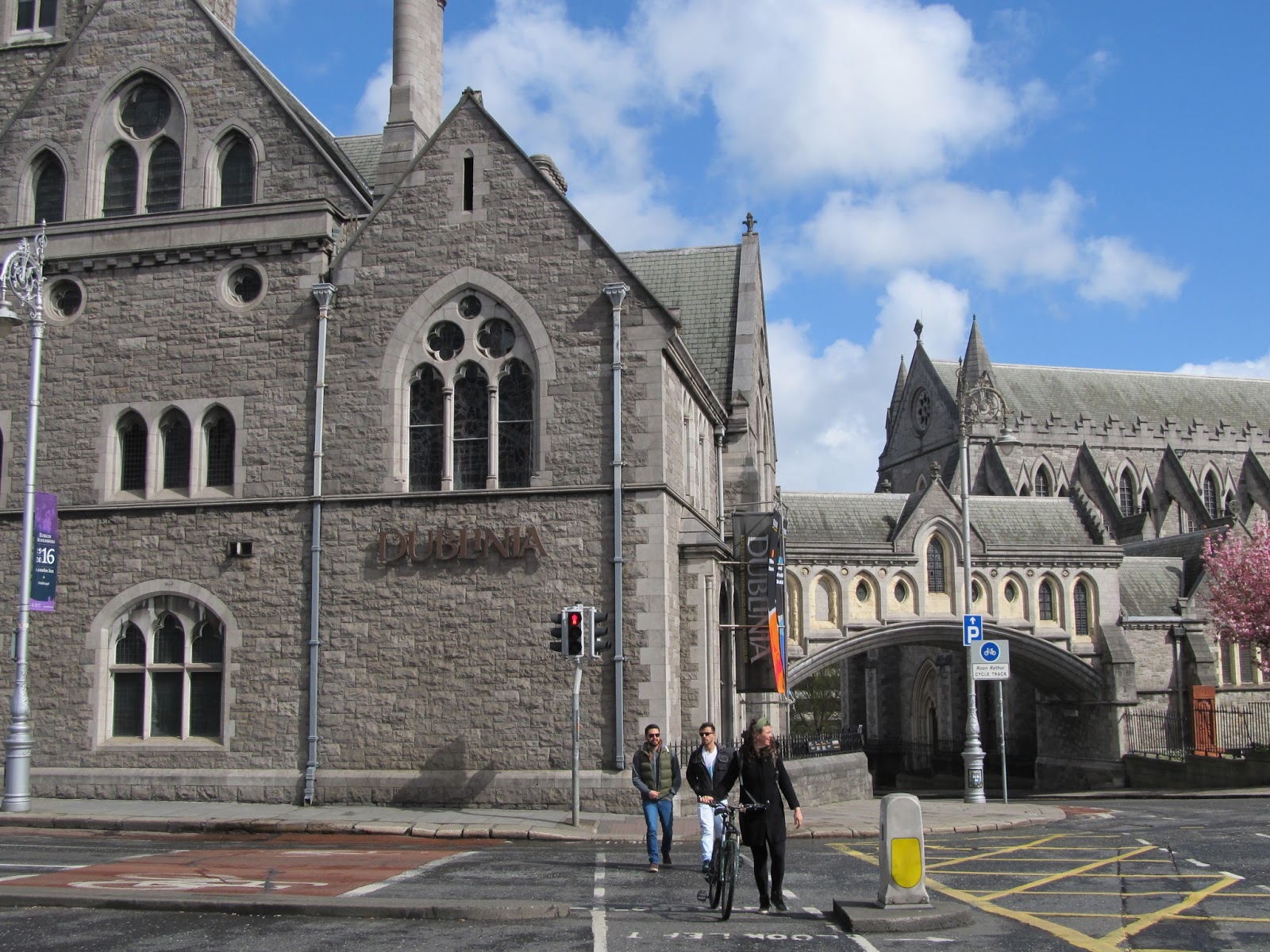
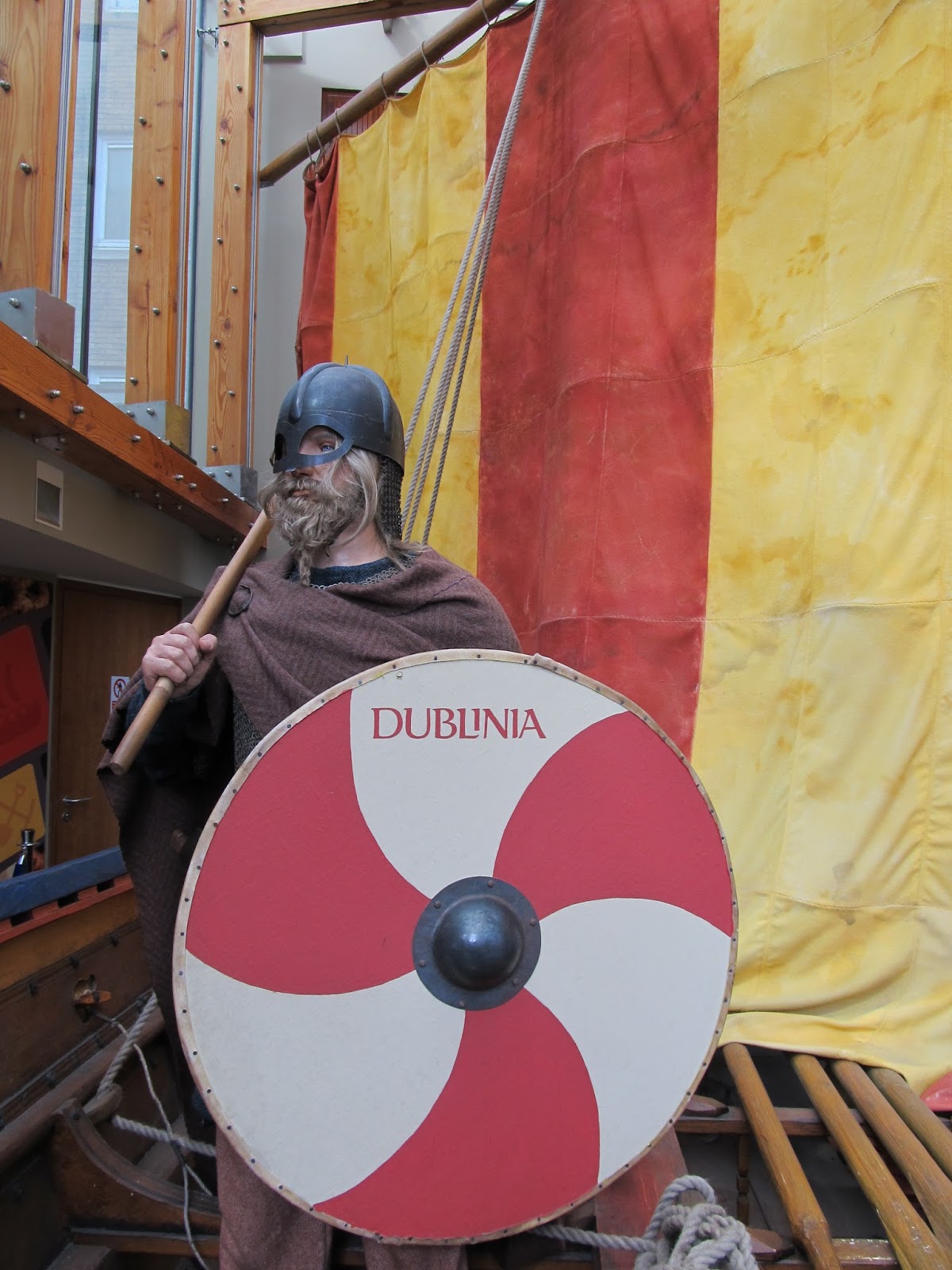
After an early, but enjoyable breakfast with the HUM 1915 class we were off to start our first full day in Dublin! Our first dose of history was a stop at Dublinia, a museum that highlighted Dublin during the Viking and Middle Ages, as well as how the artifacts from those times were discovered.


It is a common misconception that the Vikings were an uncivilized group of people. While the Viking groups raided many monasteries, they did not have anti-Christian motives. They simply knew that these were hubs of business and wealth that they would need to takeover in order to gain control. After they developed permanent settlements, the Vikings developed very prosperous markets and trading centers that helped shape industrial Dublin as we see it today.


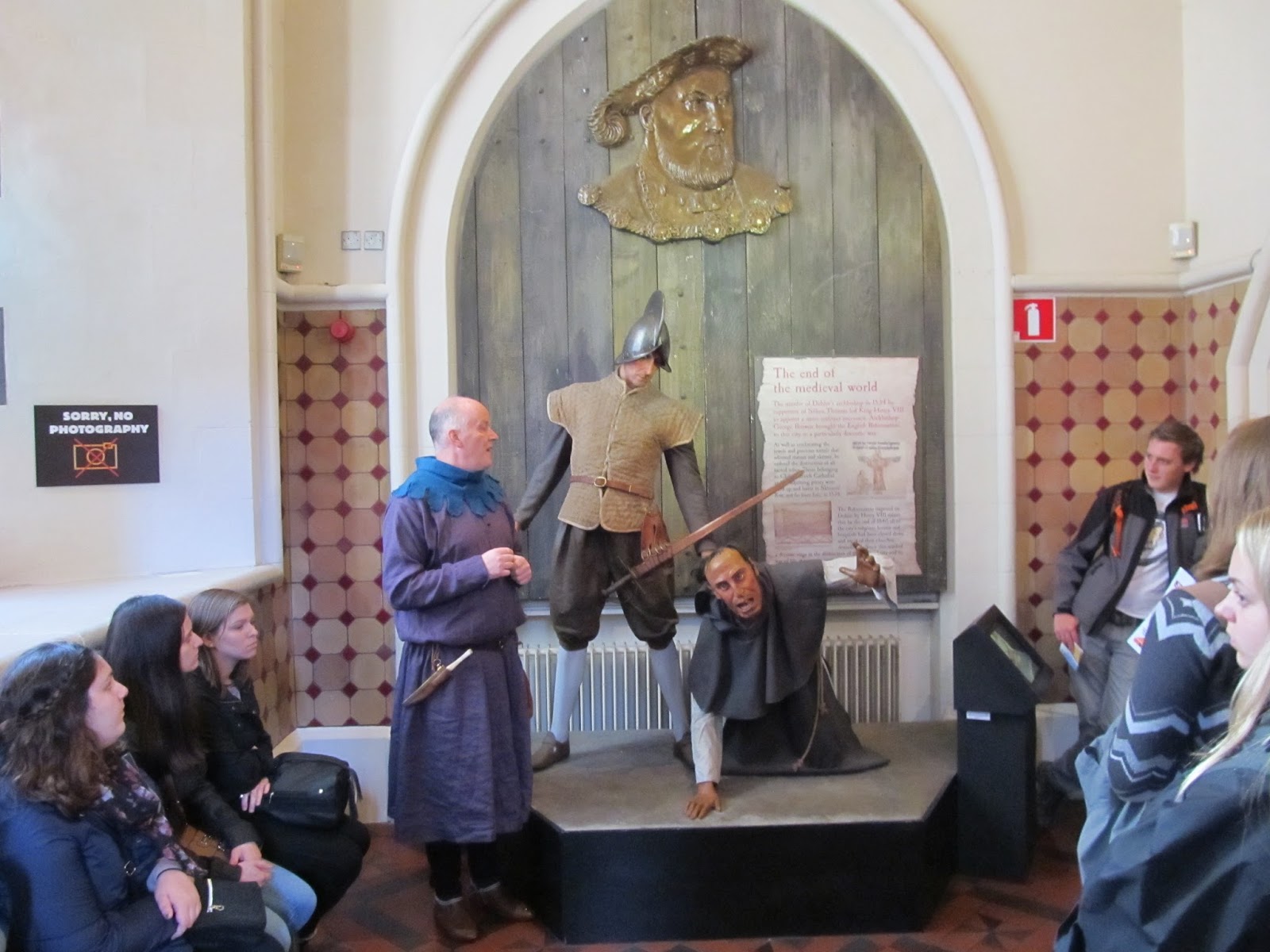
The class was then lead through the essential areas of the Middle Ages. The tour guide sported appropriate medieval peasant dress and described the layout of Anglo-Norman Dublin, what a wealthy citizen's house contained, the Quayside, the Fair, the many causes of death during this time period and the effect of the Reformation on Dublin.


 Some Interesting Facts:

  • Servants would eat off a square wooden plate called trenchers, which is how the term "square meals" began. The rich folk would eat off of pewter plates that happened to contain lead, which was later discovered to be slowly poisoning them and the poor people lucky enough to receive a hand out were to eat off of a plate made of stale bread. So the healthiest meal of the times, were known as square meals.
  • A simple Medieval street consisted of small wooden houses built very close to one another. The houses were built so close together that neighbors could lean out of their window and shake the other's hand. Many people leaned out the window to listen to conversations taking place under the eaves (the overhanging second floor roof) and those under the eaves could hear the conversations above, hence "eavesdropping" become a commonly used word.
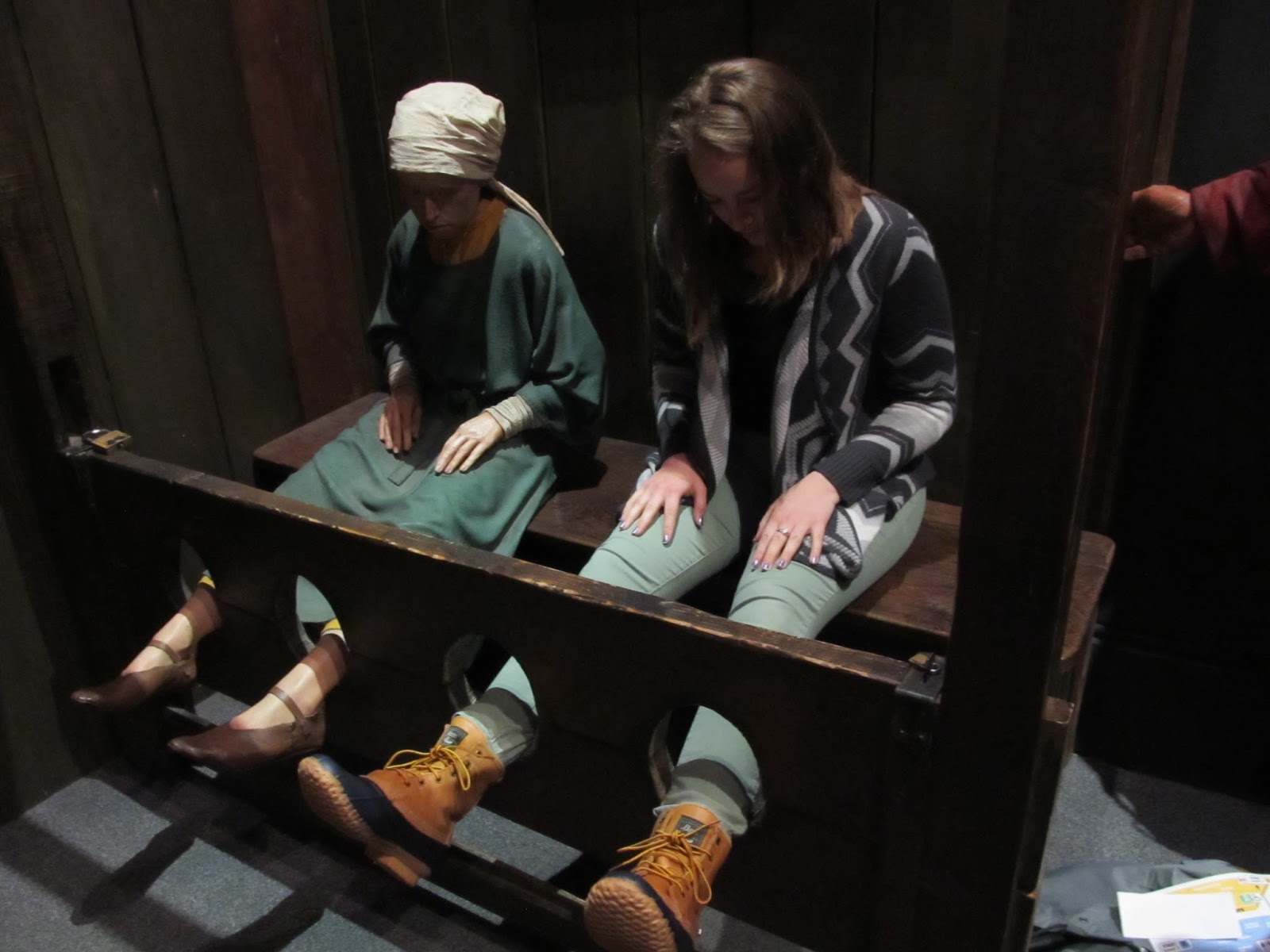
  • Criminals in the stocks were placed on display to be taunted by the general public. This public humiliation and inspired the modern term "laughing stock."
Here's Emily W bowing her head in shame in the stocks.
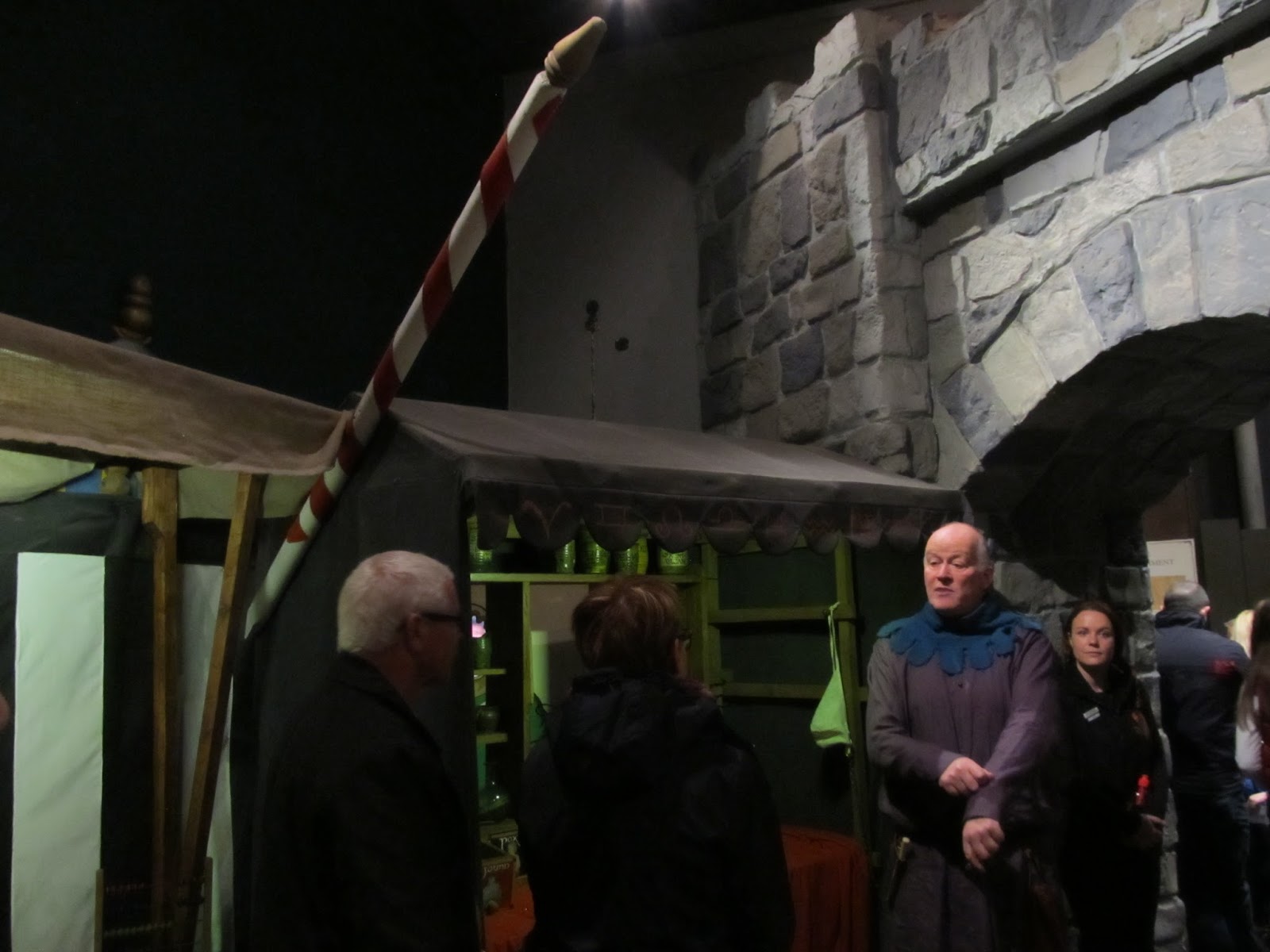
  • The (surgeon) barber's pole symbolizes blood and bandages in the red and white stripes. The picture below shows the barber surgeons stand in the Fair and our tour guide to the right.


The brief visit through the archaeology exhibition showed the many tools and detailed process of discovering, labeling, and analyzing these important historical treasures.

The Dublinia was an enlightening path for Professor Wolfe's travel course as we continue to connect the past and the present.

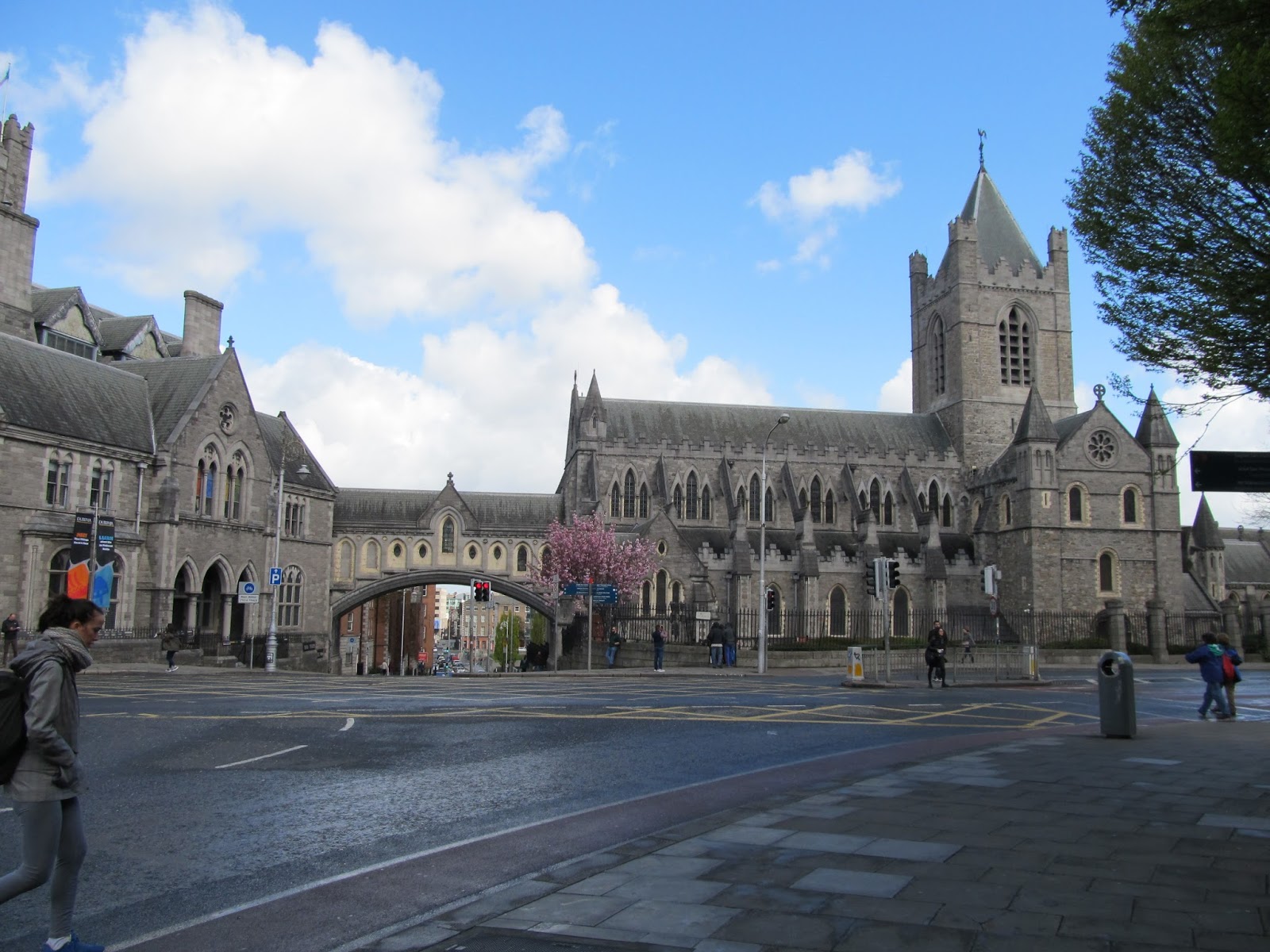
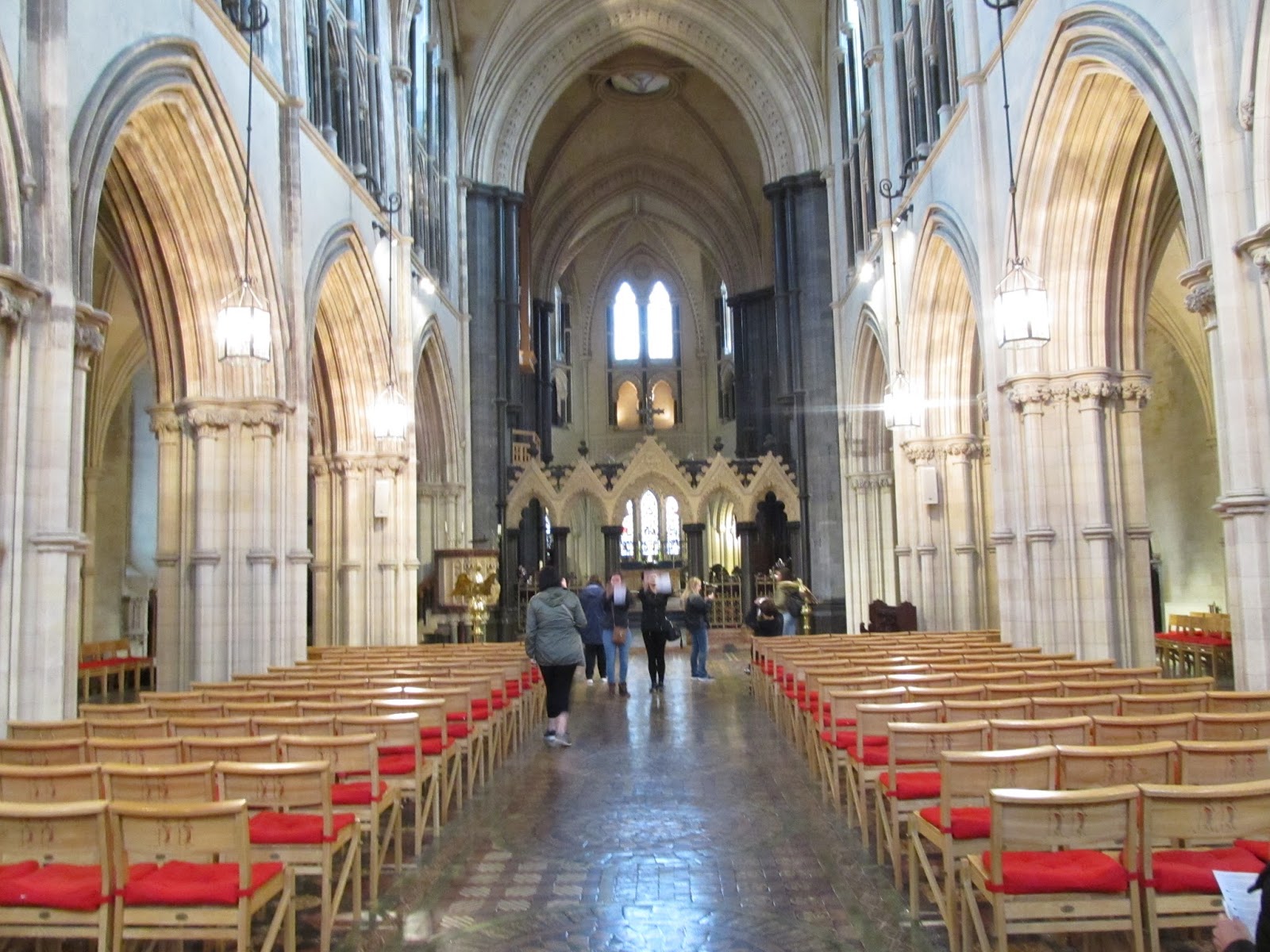
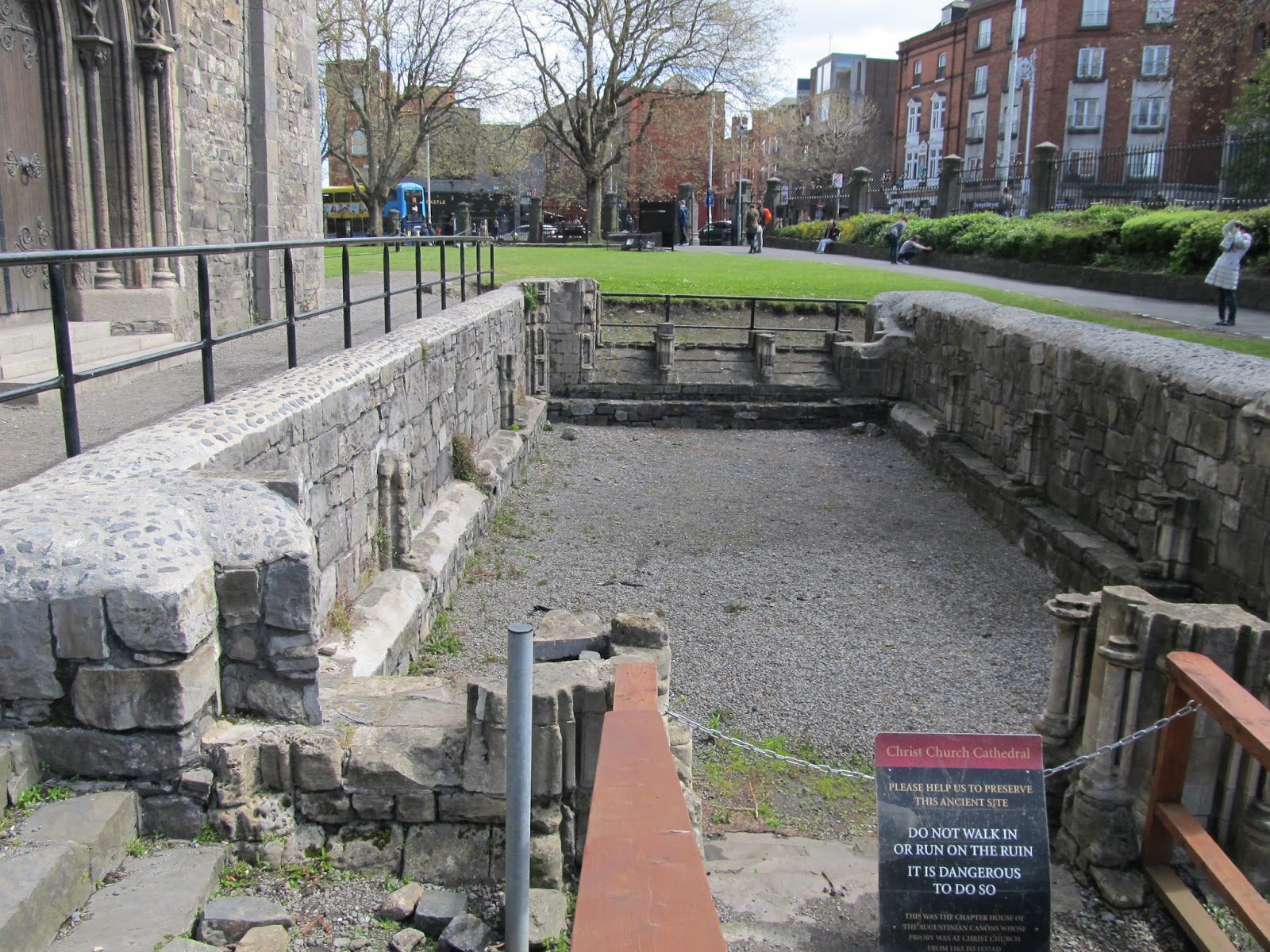
Professor Wolfe then lead the class through Christ Church Cathedral in Dublin. This stunning Protestant cathedral was founded in 1030 ce and is Dublin's oldest standing building today. This is also a place where many Irish come to ring in the New Year.


 The Oldest Structure in Ireland


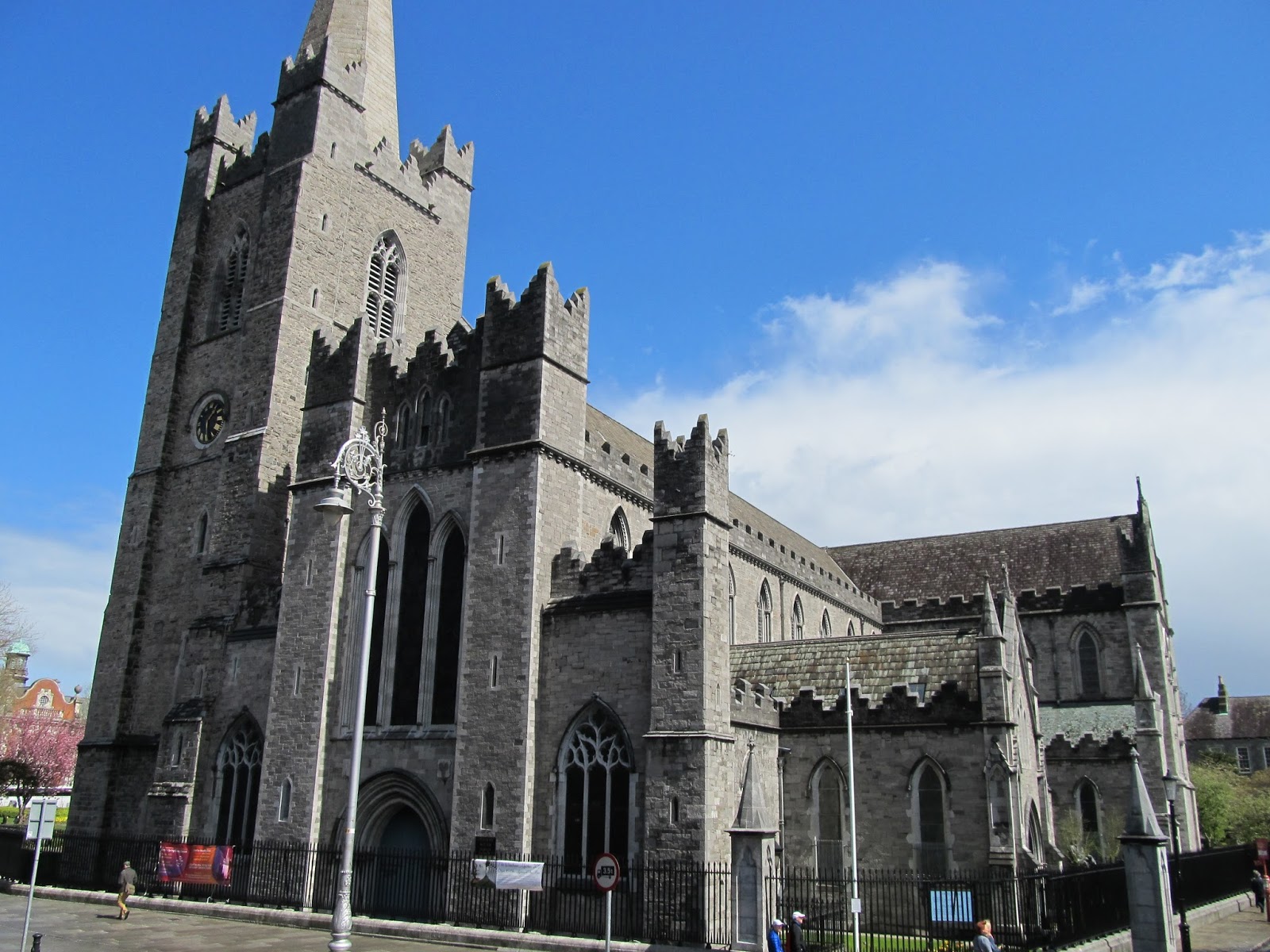
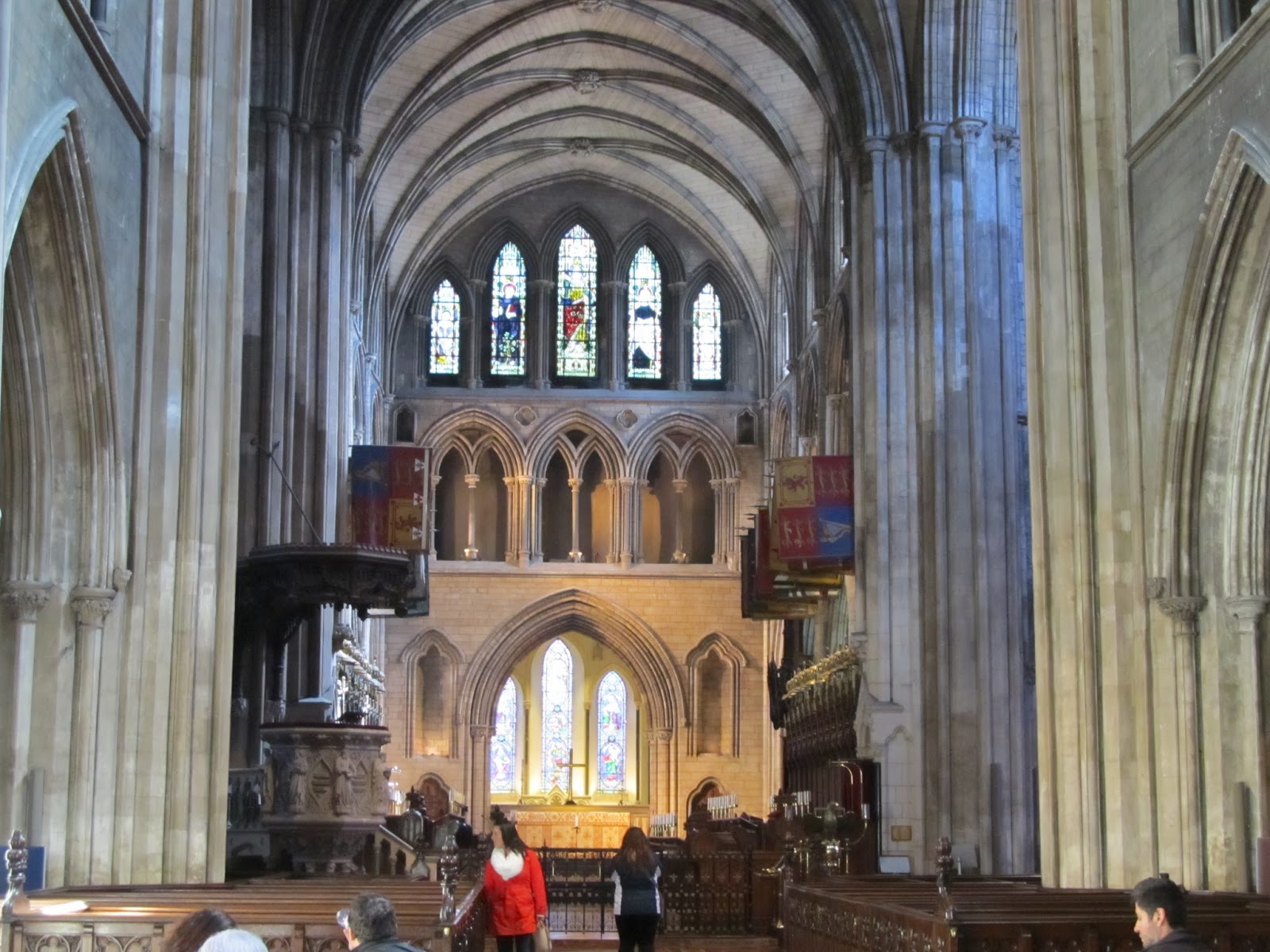
Our class then continued our journey at St. Patrick's Cathedral. This is another beautiful, Protestant cathedral that was founded in 1191. After the reformation of England, the church was deemed the Anglican Church of Ireland.

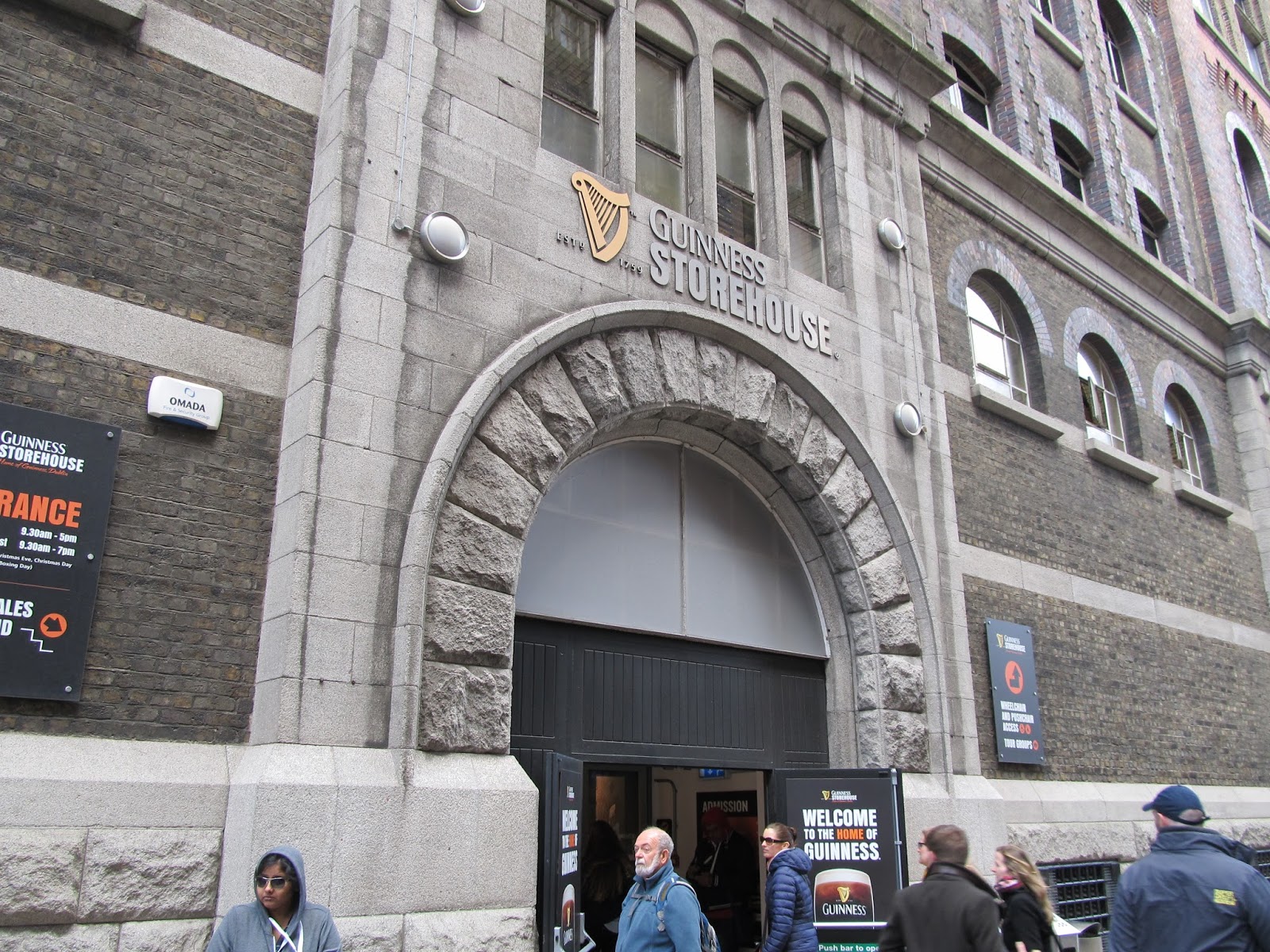
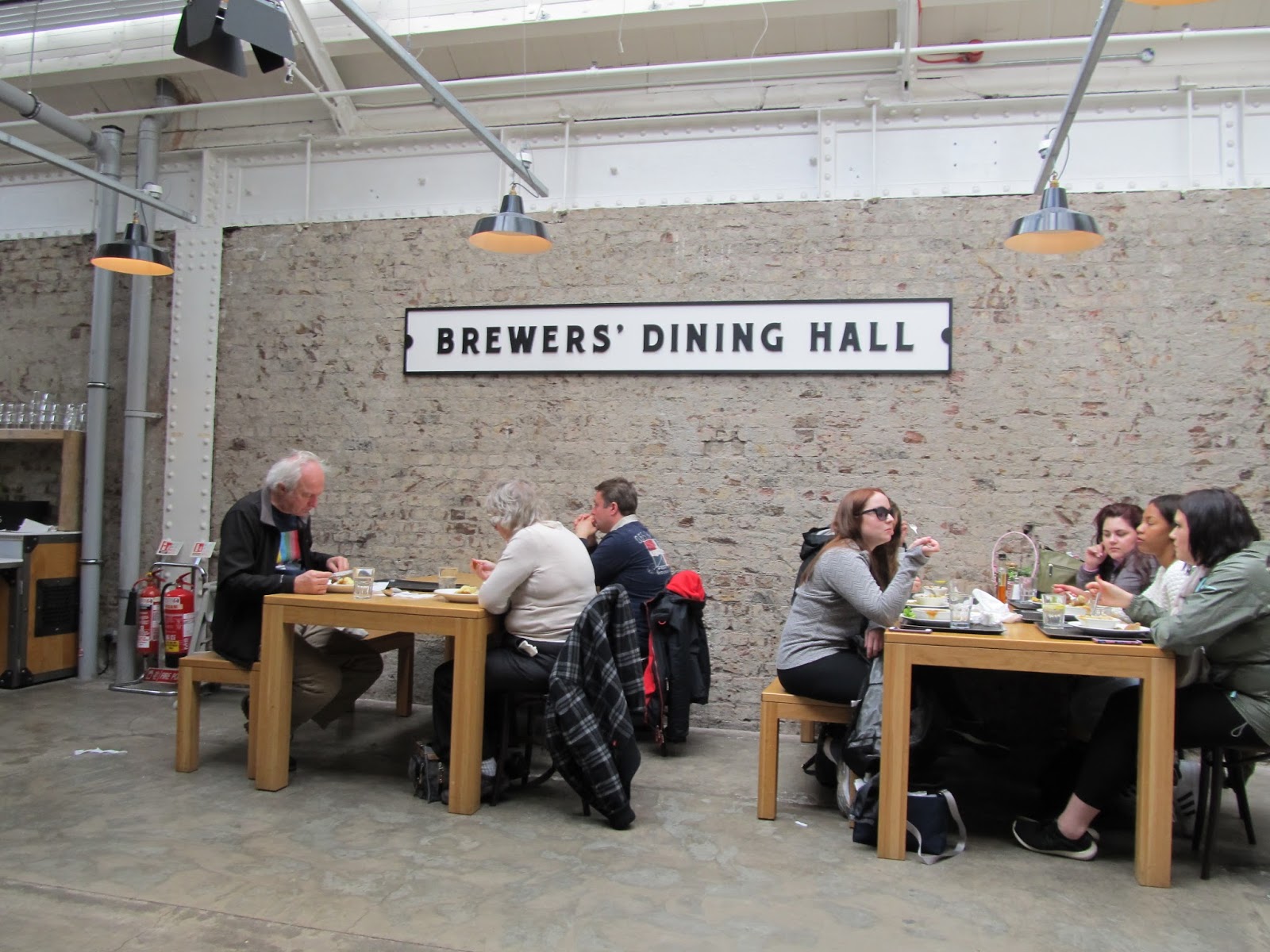
Next, the class continued their hop on- hop off tour until we reached our next destination, the Guinness Factory. Following a delicious lunch that featured Irish classics such as Cottage Pie, more Beef and Guiness Pie, and an assortment of salads, the class took a tour that showed us how Guinness is made, and how the company itself contributed to Ireland's economy.


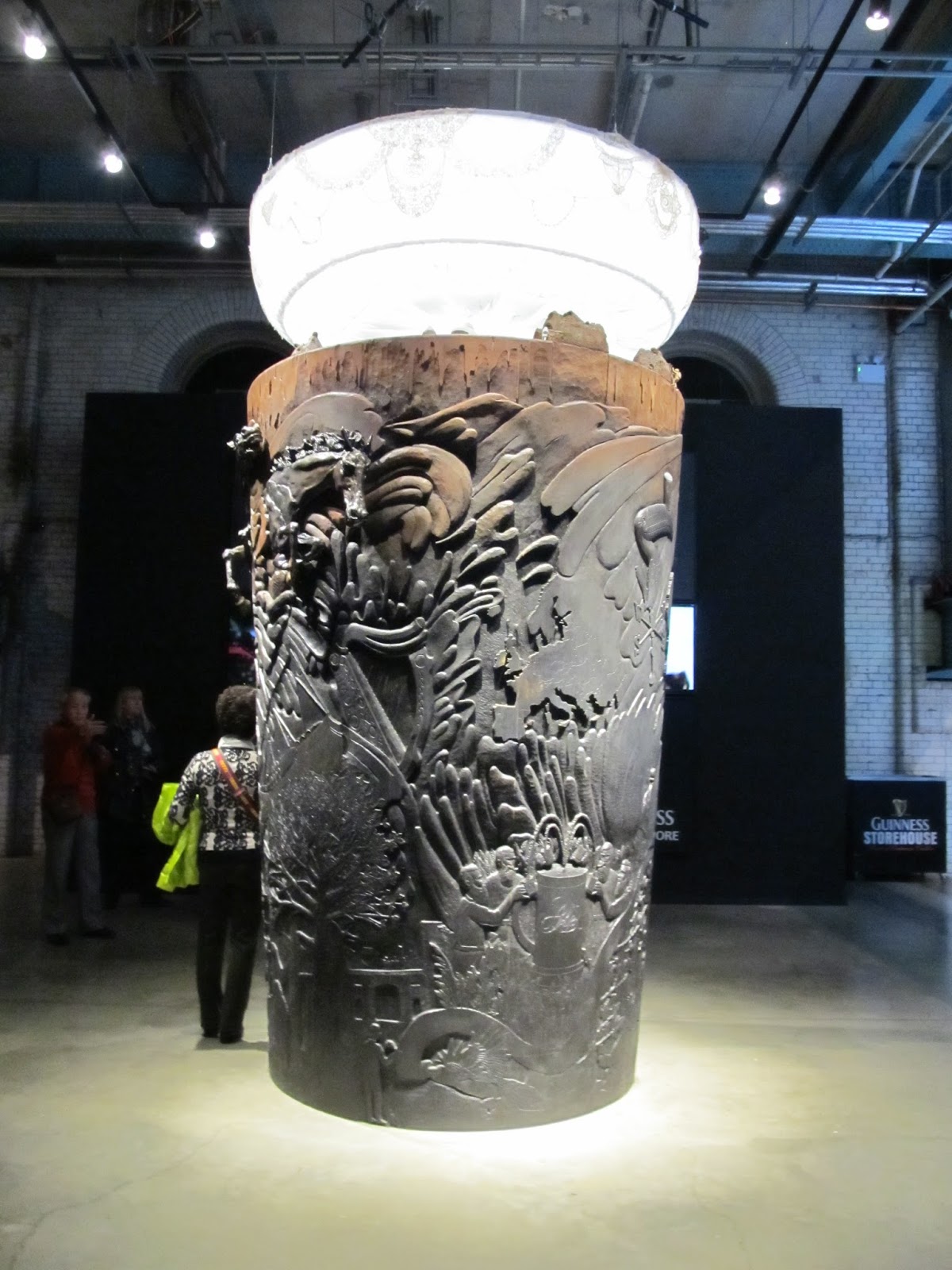
Below is a sculpture representing the history of the company and the importance of Guinness in wealth and developments in transportation of mass quantities of liquid product.


The class then heard testaments as to how the building of such a company led to the solid foundation of modern Dublin. The factory first brought job opportunities to many of the locals employing over half the city and gave Dublin a uniquely tasting export. We then learned that Arthur Guinness's great grandson used his money for good, and funded the construction of the iconic park, St. Stephen's Green, and then donated the property to the city of Dublin. The family also funded the restoration of St. Patrick's Cathedral, another generous endeavor. Both very influential to Dublin's culture and local flavor today.

Lastly, the class concluded the day with a complete hop on- hop off tour, during which our lovely Irish tour guide gave us a flavor for every landmark we passed in song. He was a perfect example of a jolly Irishman who loved his country and was excited to share information about it.

At Luigi Malone's in Temple Bar area, we enjoyed a class meal "family style." It's so wonderful to have the opportunity to spend this time getting to know new people and share such an incredible experience with them. Look forward to more pictures of the group in action as we take on Europe as a team, learning as we go, with trusty Professor Wolfe to show us the way.    
~~~~~~~~~~~~~~~~~~~~~~~~~~~~~~~~~~~~~~~~~~~~~~~~~~~~~~~~~~~~~  
             
Corissa's favorite part of today was eating dinner with everyone at Temple Bar.

It's something special to be traveling and learning with such a bubbly, positive person. Corissa's quick quips and bright smile make every day a pleasure.

Sunday, May 1, 2016

Arrival in Dublin and A Little History Lesson

We are now international travelers! Our long, somewhat sleepless overnight flight brought us to Dublin and we hit the ground running. We had a Sunday brunch at a local cafe, including Irish soda bread, omelettes, breakfast sandwiches with an Irish touch, and one big bowl of porridge.


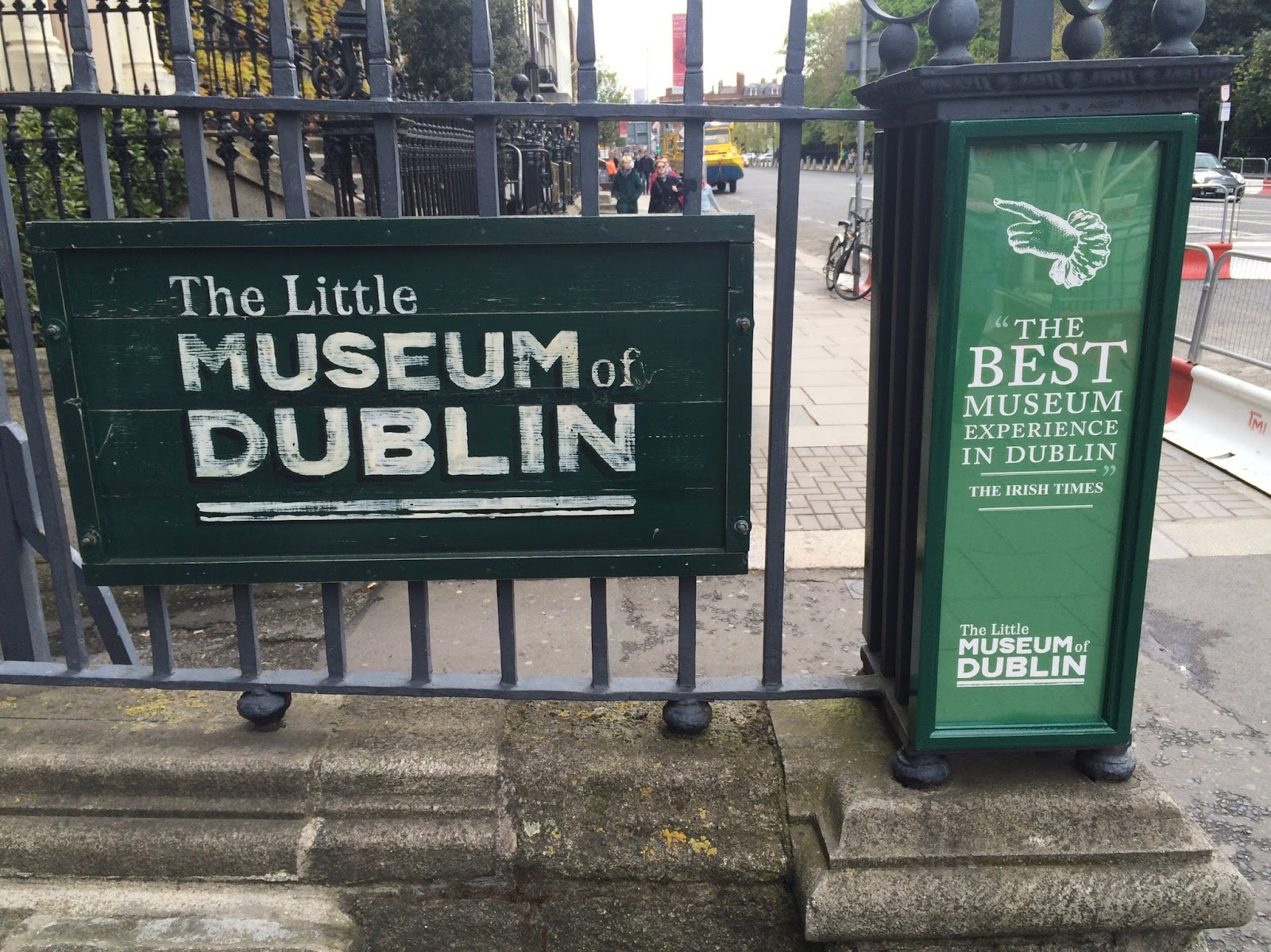
Following our meal, we stumbled upon the Little Museum of Dublin, where we had a half an hour history lesson on Dublin in the 20th century. 


Beginning in 1900, our tour guide, Phillip, told us about Queen Victoria's visit to Ireland. She was considered the "shortest, but longest queen" because she was petite in stature, but until recently, her reign was the longest. While the Irish were discontented by the overpowering English rule, they flocked to the streets, much like they would with any celebrity.


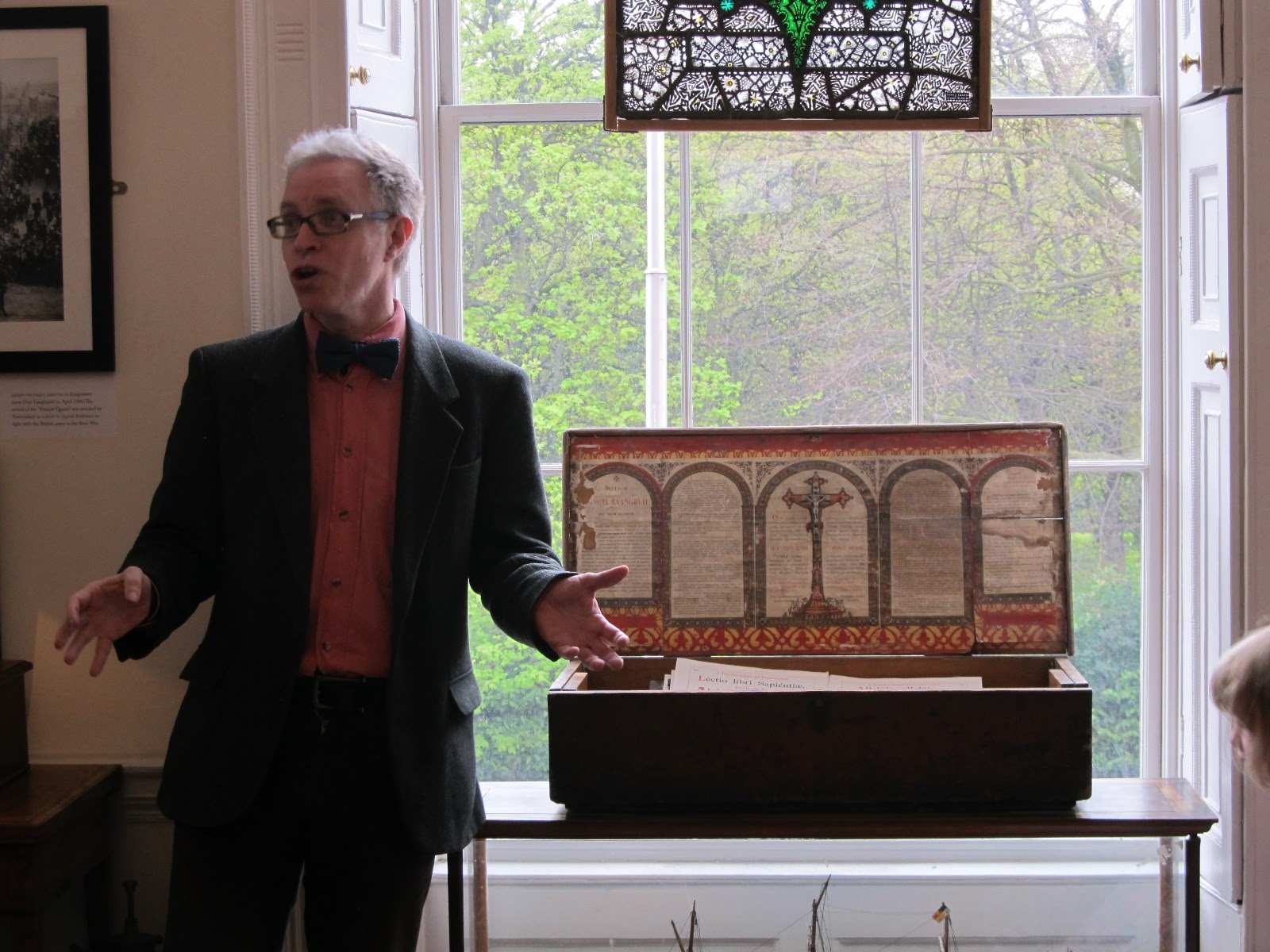
During the first World War, priests would carry portable altars to minister to the Irish sailors. The museum has one on display, containing the text of the mass in an extremely large font for the priests with poor eyesight. Glasses were very expensive at the time, so books were printed large enough that even those without proper prescriptions could celebrate the mass. Here is a picture of our tour guide, Phillip, and the portable altar described.


Eamon de Valera in uniform, head and shoulders oval portrait, c. 1915.


Next, Phillip told us about how the Irish fought for their independence, due to the poor living conditions they were subject to in tenements. Without proper representation in the government, their grievances were not heard. Beginning with Easter Rising, we learned that Eamon de Valera was one of the leaders who encouraged the Irish to take control of various British government buildings and insist that Ireland was a republic until England gave in.


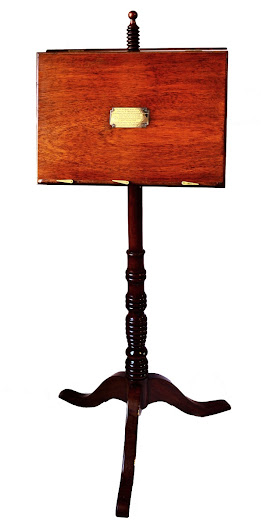
Lastly, we looked at many documents and pictures of Irish life in from the 1960's to the 1980's. In this room was the "temporary podium" that the Irish provided for JFK when he visited. This podium was actually a simple antique music stand pictured below. Apparently Irish politicians do not always use note-cards or speak from behind a podium, so this was their quick fix.


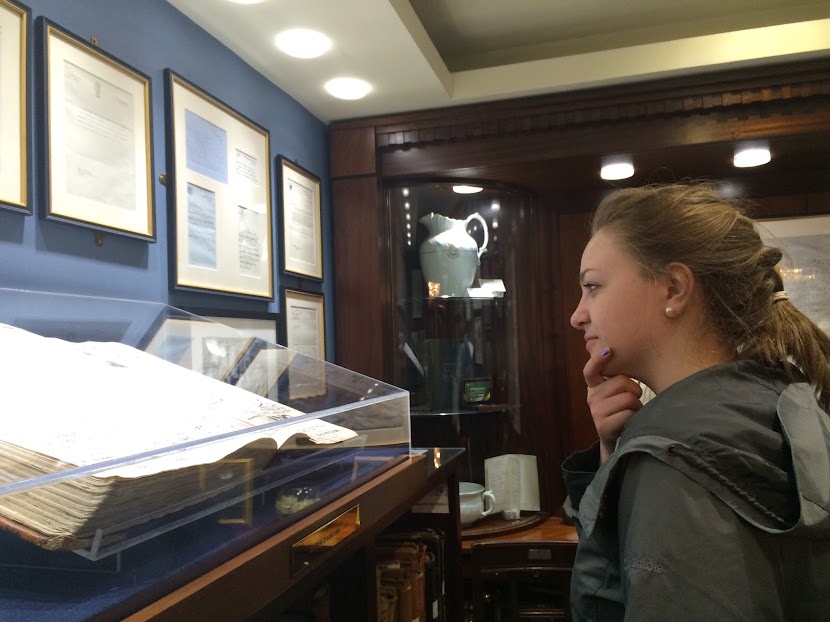
We explored the streets, stopping into the Shelbourne, where every US president that has visited Dublin has stayed. We quickly examined the little museum that contains their guest books and a draft of the Irish Constitution, which was created in one of their historic drafting rooms, now dubbed the Constitution Suite.

Shelbourne Hotel Dublin   

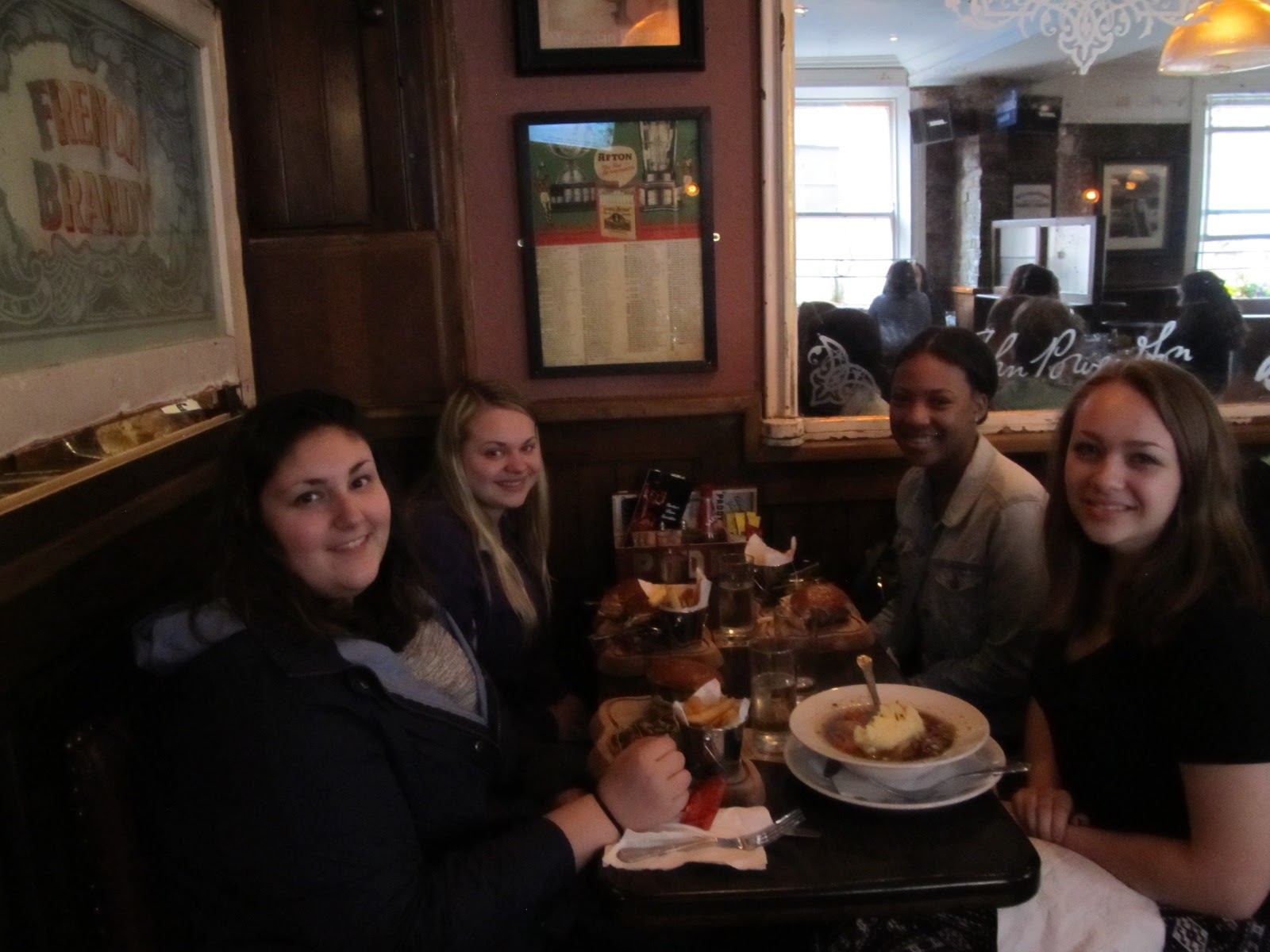
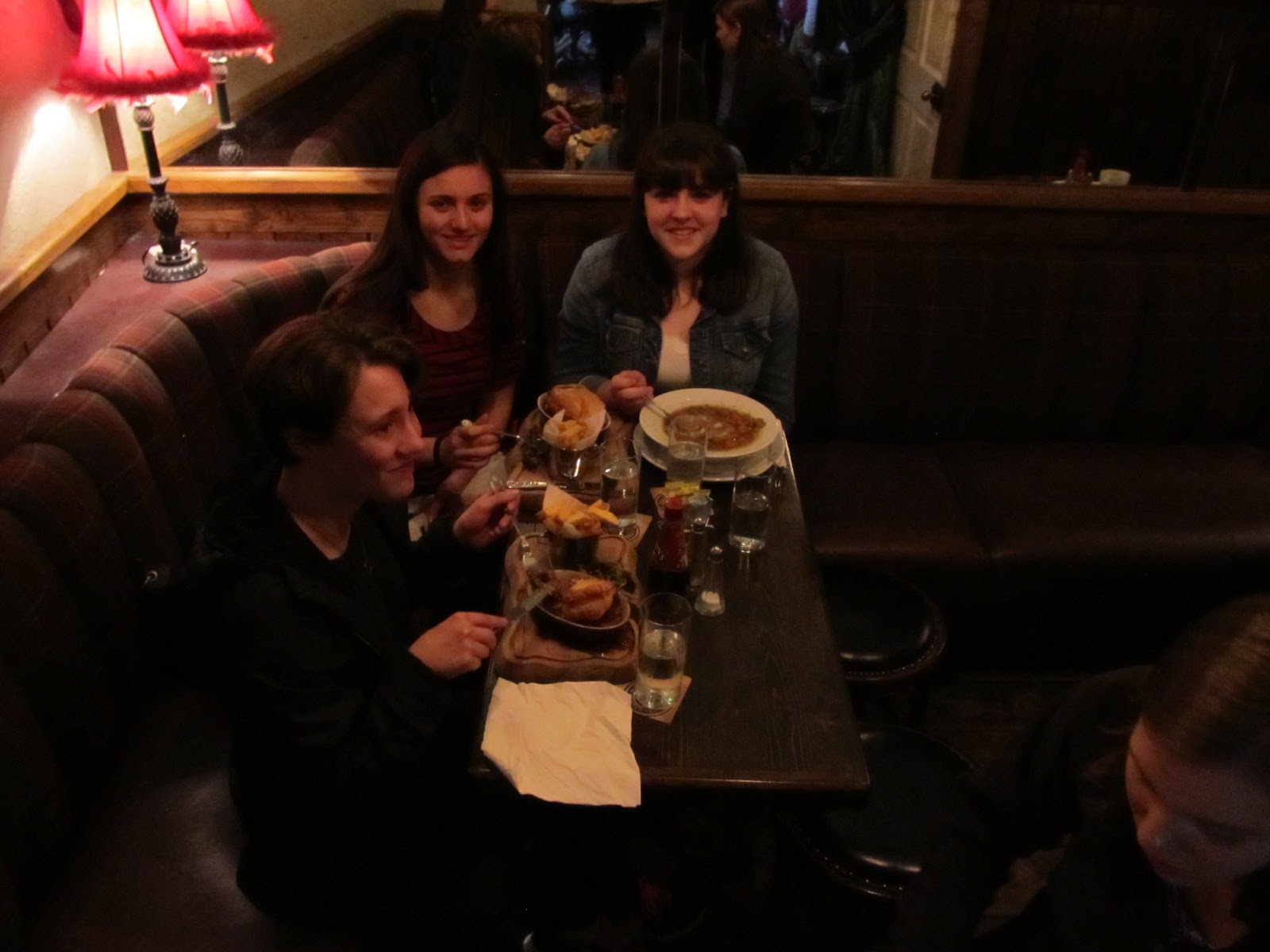
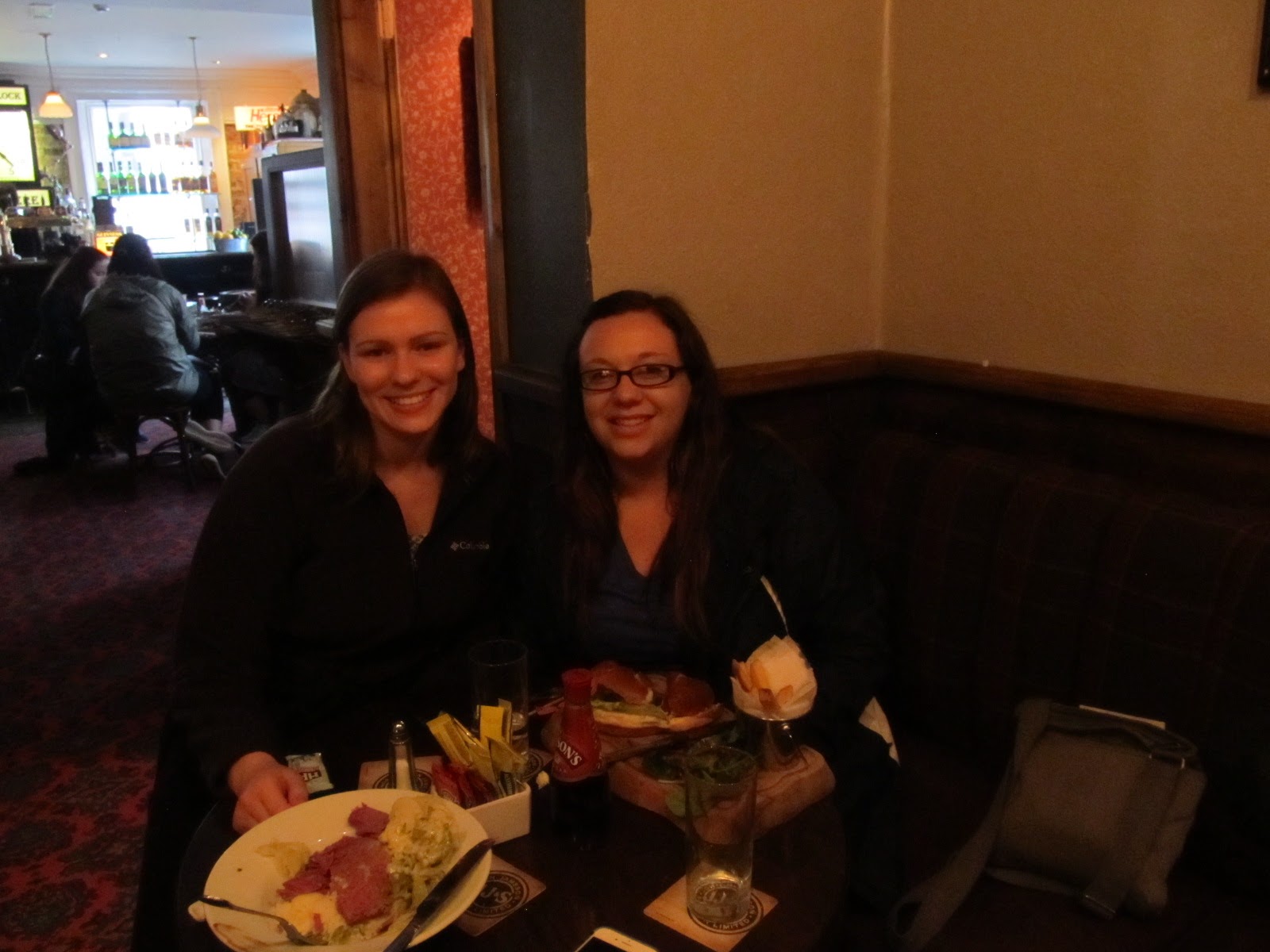
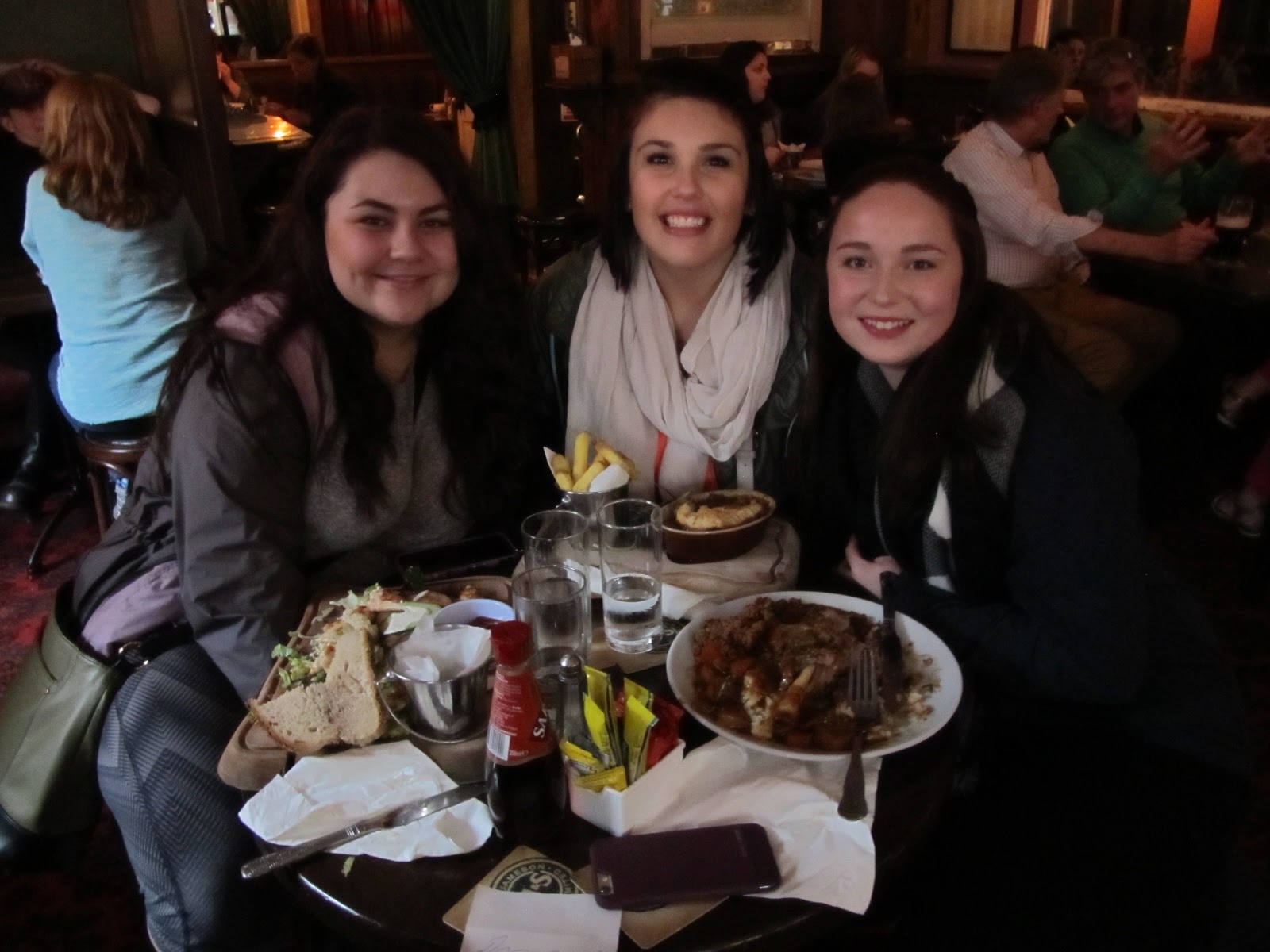
After taking some time to get unpacked and settled, we had some Irish specialties at a local pub. We enjoyed lamb shanks, stew, corned beef and cabbage, beef and Guinness pies, and Grafton Burgers.


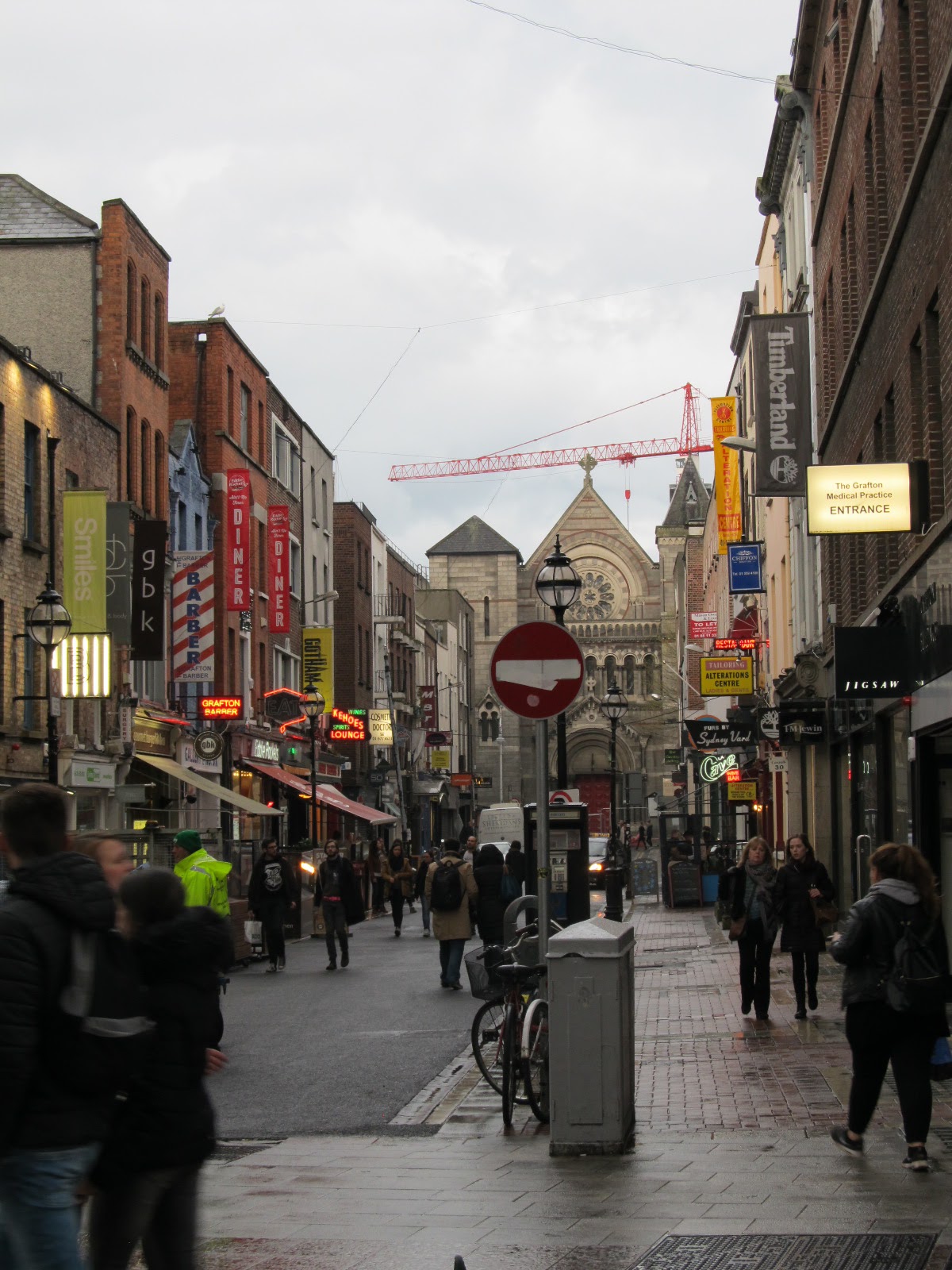
To get us further acclimated to the city, we continued exploring and saw some of Dublin's shopping district.


~~~~~~~~~~~~~~~~~~~~~~~~~~~~~~~~~~~~~~~~~~~~~~~~~~~~~~


Today was Amelia's day, so we asked her what she's liked most about Dublin thus far. She said: "I think my favorite part was the tour that we had at the little museum of Dublin. I enjoyed learning about the history and having visuals to go along with it."